
Agent to Agent Testing Platform vs Image to 3D AI
Side-by-side comparison to help you choose the right tool.

Agent to Agent Testing Platform
Validate AI agents across chat, voice, and phone interactions to ensure compliance, security, and performance.
Last updated: February 28, 2026

Image to 3D AI
Transform any photo into a stunning textured 3D model instantly and for free with Image to 3D AI.
Last updated: March 1, 2026
Visual Comparison
Agent to Agent Testing Platform
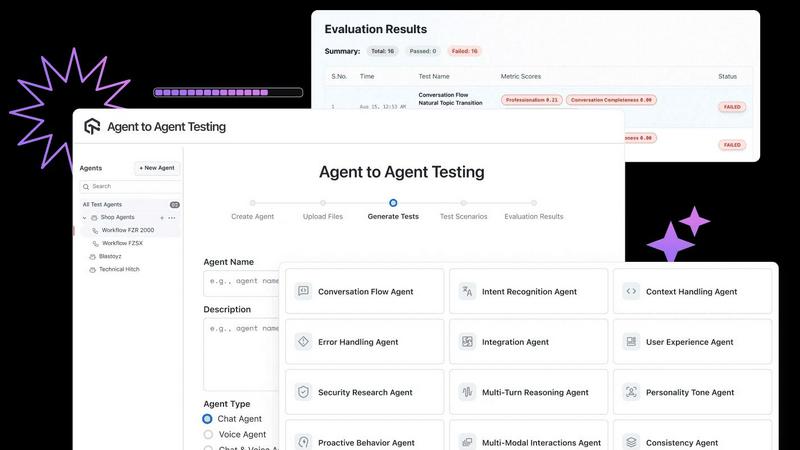
Image to 3D AI
Feature Comparison
Agent to Agent Testing Platform
Automated Scenario Generation
This feature enables the platform to create diverse test scenarios automatically. It simulates chat, voice, hybrid, or phone interactions, ensuring that AI agents are tested against a wide array of real-world situations. This helps in identifying potential flaws that could affect user experience.
True Multi-Modal Understanding
Agent to Agent Testing Platform goes beyond text-based interactions. Users can define detailed requirements or upload various inputs—such as images, audio, and video—to assess the expected outputs of the agents under test. This capability mirrors real-world scenarios, enhancing the testing process.
Diverse Persona Testing
With this feature, users can leverage a variety of personas to mimic different end-user behaviors and needs. By simulating interactions with personas such as International Caller or Digital Novice, organizations can ensure that their AI agents perform effectively across a diverse user base.
Autonomous Testing at Scale
This feature provides a comprehensive analysis of the AI agent from the perspective of synthetic end-users. It evaluates key metrics including effectiveness, accuracy, empathy, and professionalism. This ensures that the AI maintains consistent intent and tone across various interactions.
Image to 3D AI
AI-Powered Textured Image-to-3D Conversion
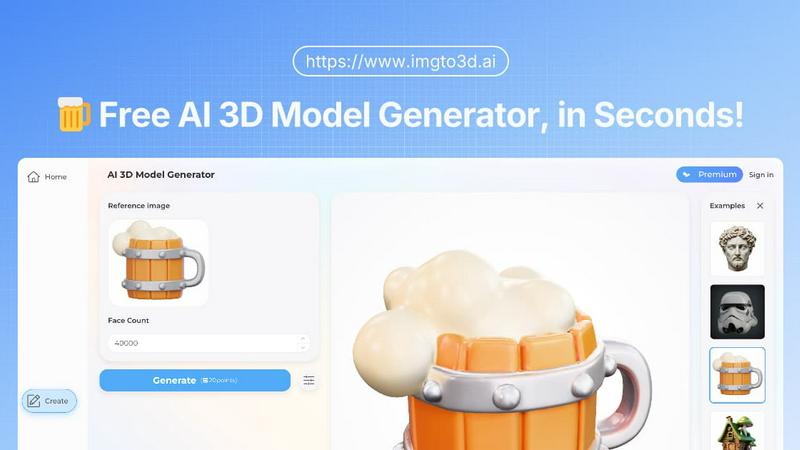
This feature utilizes cutting-edge AI technology to instantly transform any 2D image into a detailed and textured 3D model. Whether you're converting a simple sketch or a complex photo, the AI ensures high-quality results with minimal effort.
Export in Multiple Formats
Image to 3D AI supports exporting textured 3D models in popular formats such as OBJ, GLB, and STL. This versatility ensures compatibility with various applications, whether for gaming, AR/VR, or 3D printing, making it an essential tool for creators across multiple industries.
Adjustable Polygon Density
Users can control the polygon density of their generated models, allowing for a balance between performance and detail. This feature is particularly useful for optimizing assets for different use cases, ensuring that critical details are preserved without sacrificing efficiency.
Completely Free and No Sign-Up Required
One of the standout aspects of Image to 3D AI is its permanently free tier, which allows users to generate 3D models without needing to sign up or provide credit card information. This accessibility builds trust and encourages experimentation, making it an attractive option for both casual users and professionals.
Use Cases
Agent to Agent Testing Platform
Quality Assurance for Customer Support Bots
Enterprises can use this platform to rigorously test their customer support chatbots, ensuring that they handle multi-turn conversations effectively while maintaining a high level of user satisfaction.
Voice Assistant Validation
Companies developing voice assistants can utilize the platform to simulate realistic voice interactions, ensuring that their AI agents respond appropriately and contextually across multiple scenarios.
Multimodal Interaction Testing
Organizations looking to deploy AI agents capable of handling various input forms—text, voice, and images—can leverage the platform's multi-modal understanding feature to validate performance across these channels.
Risk Assessment and Compliance Testing
The platform's regression testing capabilities allow companies to assess the risks associated with their AI agents. This ensures that potential policy violations and critical issues are identified and addressed before deployment.
Image to 3D AI
Game Development
Indie game developers can utilize Image to 3D AI to rapidly create characters, environments, and props, significantly reducing asset creation time from days to minutes. This capability is perfect for both prototyping and final asset development.
3D Printing
The platform allows users to design custom figurines or practical objects and export them directly for 3D printing. With optimized export formats, users can seamlessly transition from digital creation to physical production without the need for additional software.
XR/VR Experiences
Quickly populate virtual worlds with high-quality assets that perform optimally even in resource-constrained environments. Image to 3D AI empowers creators to build immersive experiences for XR and VR applications without the usual time-consuming modeling processes.
Creative Portfolios
Artists and designers can leverage the platform to quickly iterate on concepts and build impressive portfolios. By generating high-quality 3D models in a fraction of the time, users can focus more on creativity and less on technical modeling challenges.
Overview
About Agent to Agent Testing Platform
Agent to Agent Testing Platform is an innovative AI-native quality assurance framework specifically designed to validate the behavior of AI agents in real-world environments. As AI systems grow more autonomous, traditional quality assurance models that cater to static software become inadequate. This platform transcends basic prompt-level checks, offering comprehensive evaluations of multi-turn conversations across various interfaces, including chat, voice, and phone. Its main value proposition lies in ensuring that enterprises can thoroughly validate the functionality and reliability of their AI agents before deploying them in production. With a focus on uncovering long-tail failures and edge cases, this platform becomes an essential tool for organizations looking to enhance the performance and security of their AI solutions.
About Image to 3D AI
Image to 3D AI is a groundbreaking web-based platform that revolutionizes the way we create 3D models from 2D images. It allows users to quickly transform photos, sketches, and drawings into fully realized 3D models in just seconds, eliminating the lengthy process traditionally associated with 3D modeling. This tool is designed for a wide range of users, from indie game developers and e-commerce managers to artists and hobbyists. The main value proposition of Image to 3D AI lies in its breathtaking speed and radical accessibility, making 3D modeling more approachable than ever before. With its unique free tier that requires no sign-up, anyone can explore its capabilities risk-free, allowing creators to generate high-quality 3D assets without the need for extensive technical expertise or costly software. By automating complex geometry and depth analysis, Image to 3D AI effectively bridges the gap between flat concepts and dimensional creations, proving to be a game-changer in the world of 3D modeling.
Frequently Asked Questions
Agent to Agent Testing Platform FAQ
What types of AI agents can be tested with this platform?
The Agent to Agent Testing Platform supports testing for various AI agents, including chatbots, voice assistants, and phone caller agents, across multiple scenarios.
How does the platform ensure comprehensive testing?
The platform employs automated scenario generation, which creates diverse test cases that simulate real-world interactions. This approach helps uncover long-tail failures and edge cases that manual testing might miss.
Can I customize test scenarios?
Yes, users can access a library of hundreds of predefined scenarios or create custom scenarios tailored to their specific testing requirements, ensuring relevant assessments of their AI agents.
What metrics does the platform evaluate?
The platform evaluates several key metrics, including bias, toxicity, hallucinations, effectiveness, and empathy. This comprehensive analysis helps organizations optimize their AI agents' performance and user experience.
Image to 3D AI FAQ
How does Image to 3D AI work?
Image to 3D AI uses advanced algorithms to analyze 2D images and convert them into 3D models by assessing geometry and depth. Users simply upload an image, and the AI handles the rest, producing a textured 3D model in seconds.
What types of images can I upload?
You can upload various image types, including photos, drawings, and sketches. The AI works best with clear, well-lit images of single objects to ensure the best possible results.
Is there a limit to how many models I can generate?
While Image to 3D AI offers a completely free service, free users may experience processing queues during peak hours to ensure service quality. However, there are no set limits on the number of models you can create.
What is the Pro access feature?
Pro access provides users with stable access without queues and the ability to generate textured, multi-format exports. This option is ideal for professionals who require consistent performance and higher output capabilities.
Alternatives
Agent to Agent Testing Platform Alternatives
Agent to Agent Testing Platform is a pioneering AI-native quality assurance framework designed to validate agent behavior across various communication channels, including chat, voice, and multimodal systems. As organizations increasingly adopt autonomous AI systems, traditional QA models struggle to keep pace with the dynamic nature of these technologies, prompting users to seek alternatives that better fit their specific needs. Common reasons for exploring alternatives include pricing concerns, feature gaps, integration capabilities, or the need for more tailored solutions to meet unique operational demands. When selecting an alternative, it's crucial to consider aspects such as scalability, usability, the comprehensiveness of testing methods, and the ability to provide insights into agent behavior and compliance.
Image to 3D AI Alternatives
Image to 3D AI is a web-based platform that leverages artificial intelligence to convert 2D images into textured 3D models in seconds. It falls under the category of AI-assisted design tools, particularly aimed at simplifying the 3D modeling process for diverse users, from indie game developers to artists and hobbyists. Despite its impressive capabilities, users often seek alternatives for various reasons, such as the need for additional features, specific platform compatibility, or pricing structures that align better with their budget and requirements. When choosing an alternative, it’s essential to consider factors like ease of use, the quality of output, customization options, and whether the tool offers a free tier for initial exploration.