Formtorch vs OGimagen
Side-by-side comparison to help you choose the right tool.

Formtorch
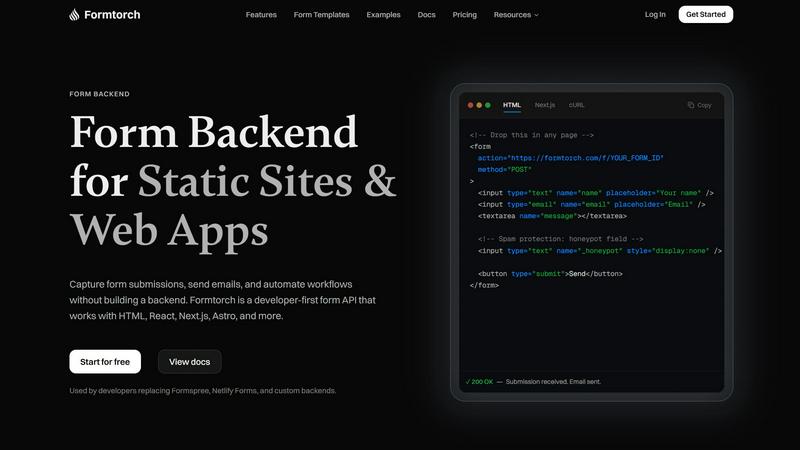
Formtorch is a modern form backend API and serverless form backend that lets developers handle form submissions without building a backend.

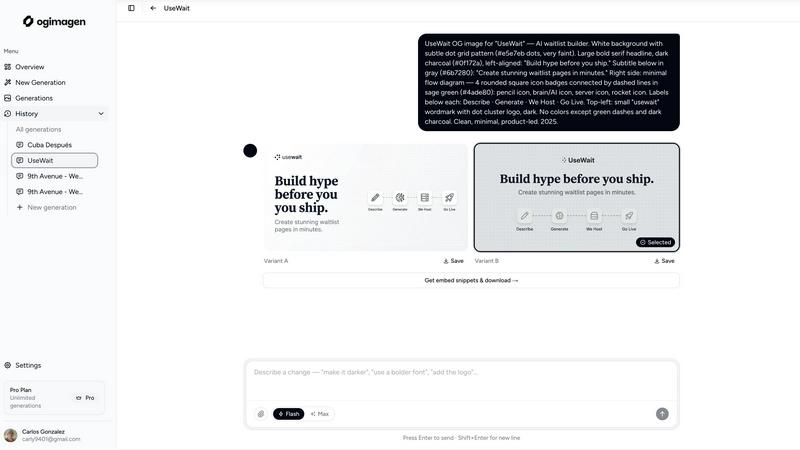
OGImagen instantly creates beautiful, platform-perfect social media images and meta tags from your content.
Last updated: March 11, 2026
Visual Comparison
Formtorch
OGimagen
Overview
About Formtorch
Formtorch is a modern form backend API and serverless form backend that allows developers to handle form submissions without building or maintaining a backend. It is designed for static sites, SaaS products, and modern web applications where speed, simplicity, and reliability are essential.
With Formtorch, you can connect any HTML form to a secure endpoint and start receiving submissions instantly. There is no need for server setup or backend code, making it easy to add contact forms, lead capture forms, and user input handling to any project. It works seamlessly with frameworks like Astro, Next.js, React, and plain HTML.
As a strong alternative to Formspree, Formtorch focuses on a faster and more modern developer experience. It includes built-in spam protection, webhooks, and integrations with tools like Slack, Notion, Zapier, and more to automate workflows and manage submissions efficiently.
With a generous free plan and scalable infrastructure, Formtorch is a reliable solution for handling form submissions without a backend.
About OGimagen
Let's be honest: creating compelling Open Graph images is a chore that most developers and content creators dread. It's the last step before hitting publish, often done in a rush with a clunky design tool, resulting in a bland, forgettable link preview. OGimagen is the antidote to that entire tedious process. This brilliant tool uses AI to generate stunning, production-ready social card images in seconds. You simply provide a title, description, and a few brand cues, and it delivers not one, but two AI-crafted variants, perfectly optimized for every major platform—OG, Twitter, and LinkedIn. But where it truly shines, in my opinion, is its developer-first mindset. It doesn't just give you pretty pictures; it hands you the exact meta tag snippets for your framework (Next.js, Astro, SvelteKit, you name it) ready to copy-paste into your code. It's built for anyone who wants their shared links to look professional and clickable, from solo bloggers and indie hackers to marketing teams at scaling startups, eliminating the need for any design skill or complex software.