FindExams vs Interactive Circle of Fifths
Side-by-side comparison to help you choose the right tool.

FindExams
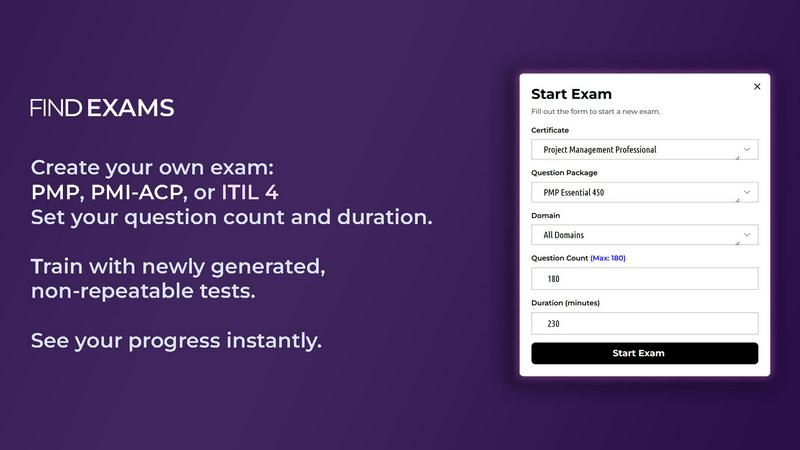
My top pick for certification prep, FindExams uses realistic, randomized tests to build the confidence you need to pass.
Last updated: March 18, 2026

Interactive Circle of Fifths
Master scales and chord progressions with this essential, interactive tool for musicians.
Last updated: March 1, 2026
Visual Comparison
FindExams
Interactive Circle of Fifths
Feature Comparison
FindExams
Realistic Exam Simulation Engine
This is the heart of FindExams and, in my opinion, its killer feature. The platform doesn't just give you questions; it meticulously replicates the structure, difficulty, and time pressure of the official exams. You can customize the number of questions and the timer to match the exact conditions you'll face, transforming your study session from a casual review into a true performance test. This "feel" of the real exam is invaluable for building mental stamina and managing test-day anxiety.
Dynamic, Randomized Question Bank
Say goodbye to memorizing question sequences. FindExams shuffles questions and regenerates variants for every single practice attempt. This means you're tested on your understanding of concepts, not your memory of answer choices. Each exam feels fresh and challenging, which is absolutely critical for ensuring your knowledge is flexible and deep, ready for anything the official exam throws at you.
Domain-Level Performance Analytics
What I love here is the strategic insight. FindExams doesn't just give you a score; it breaks down your performance by domain (like "Business Environment" for PMP or "Agile Principles" for PMI-ACP). This allows you to move beyond a generic "I need to study more" to a targeted "I need to drill down on Risk Management." This focused feedback is what turns practice into measurable progress and efficient study planning.
Customizable Practice Sessions
Flexibility is key for effective preparation. Whether you have 15 minutes or 3 hours, FindExams adapts. You can create quick, focused quizzes on your weakest domains, run full-length marathon exams, or use their ready-made presets. This level of control lets you tailor your preparation to your schedule and specific needs, making it a far more efficient tool than rigid, one-size-fits-all practice tests.
Interactive Circle of Fifths
Dynamic Circle & Key Exploration
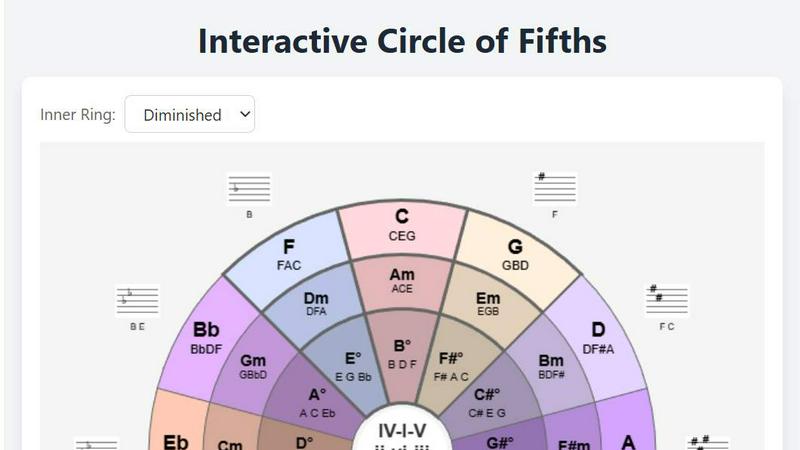
The heart of the tool is its namesake: a fully interactive Circle of Fifths. Click on any key, and the entire interface updates in real-time. This isn't a passive image; it's a control center. Instantly, you see the harmonized scale chords for that key (like C, Dm, Em, etc.), their scale degrees (I, ii, iii), and their functional relationships. It visually demonstrates how moving clockwise around the circle adds sharps, while moving counter-clockwise adds flats, making key signatures intuitive. This dynamic exploration is the fastest way to internalize the relationships that govern all music.
Integrated Piano & Guitar Visualizers
This is, hands down, my favorite feature and a game-changer for practical learning. Once you select a chord or scale, you don't just get its name—you get a clear, color-coded visualization of it on a piano keyboard and a guitar fretboard. It shows you the exact notes and, crucially, the recommended fingerings. For guitarists struggling with barre chords or pianists navigating inversions, this immediate translation from theory to finger placement is invaluable. It turns theoretical knowledge into playable muscle memory instantly.
Comprehensive Scale & Chord Library
The tool goes far beyond basic major and minor. Its inner ring and menus give you direct access to pentatonic scales (the backbone of rock and soloing), the soulful blues scale, diatonic modes, and even the tense, symmetrical diminished scale. It also covers chord types like the diminished chord. This library allows you to understand not just what you're playing, but why it creates a specific mood, making it perfect for composing and improvisation.
Harmonized Scale & Chord Sequencer Panel
This panel is your practical workshop. The "Harmonized Scale" section lays out all the chords native to your chosen key (e.g., I-IV-V-vi), complete with their Roman numeral analysis. The "Chord Sequencer" then lets you audition these chords in any order. You can build and listen to common progressions (like I-V-vi-IV) or experiment with more exotic movements to hear how they resolve. This feature turns the tool from a reference into an active composition and ear-training assistant.
Use Cases
FindExams
The Final Confidence Builder Before Exam Day
You've read the guides and taken notes, but you're plagued by doubt. This is where FindExams shines. Running several full-length, timed simulations in the week before your exam is the ultimate readiness check. Consistently scoring above 90% on these realistic mints, as their data suggests, is a powerful psychological boost and a strong indicator of official exam success.
Targeted Weakness Remediation
After an initial practice test, you discover your "Stakeholder Engagement" domain score is lagging. Instead of re-studying everything, you use FindExams to generate custom quizzes filtered exclusively for that domain. This allows for intense, focused practice on precise trouble areas, turning weaknesses into strengths with surgical efficiency.
Overcoming Question Pattern Recognition
If you've been using static materials, you risk learning the "pattern" of questions rather than the underlying concepts. FindExams' randomized engine breaks this habit. By presenting questions in a new order with different variants each time, it forces genuine comprehension and application, which is exactly what the modern, scenario-based certification exams test.
Simulating Real-World Exam Pressure
Many candidates know the material but crack under the time pressure and formal setting. Regularly practicing with FindExams' timer activated conditions your brain to perform under constraints. This builds the pacing skills and calm focus needed to navigate a four-hour exam successfully, making the actual test day feel like just another practice session.
Interactive Circle of Fifths
Songwriting & Chord Progression Inspiration
Stuck in a creative rut? Use the Chord Sequencer to experiment. Start with a familiar I-IV-V progression in one key, then use the Circle to modulate to a relative minor or a key a fifth away. Hearing the changes in real-time allows you to discover smooth, professional-sounding transitions you might not have found by trial and error on your instrument alone. It’s like having a theory co-writer.
Instrument-Specific Fingering Practice
For students learning a new instrument, this is a practice powerhouse. Instead of searching for separate chord charts or scale diagrams, you can select a scale like "A Minor Pentatonic" and instantly see the box patterns on the guitar neck. You can then cycle through the harmonized chords in that key (Am, Dm, E) and see their chord shapes, all within the same theoretical context, making practice sessions incredibly efficient and focused.
Music Theory Homework & Study Aid
For formal music students, this tool clarifies textbook concepts. Seeing the relationship between, for example, the key of C Major and its relative minor (A Minor) with a single click, and then hearing the difference between their scales and chords, cements understanding. It visually explains scale degrees, chord functions (like which chord "resolves to" another), and modulation in a way static pages cannot.
Improvisation & Solo Development
Improvisers can use it to map out their harmonic landscape. Before a jam in, say, Bb Major, you can quickly review the diatonic chords and then switch to the "Blues Scale" overlay to see which "blue notes" work over the progression. Understanding how the pentatonic or blues scale fits over the underlying chords (shown clearly on your instrument's visualizer) provides a confident roadmap for crafting more melodic and intentional solos.
Overview
About FindExams
FindExams isn't just another question bank; it's your personal, high-stakes exam rehearsal studio. As someone who has watched countless professionals stumble on certification day due to "exam shock," I believe FindExams tackles the real problem: not just knowing the material, but mastering the pressure, timing, and format of the actual test. This platform is meticulously designed for ambitious project managers, agile practitioners, and business analysts aiming for elite certifications like PMP, PMI-ACP, ITIL 4, PMI-PBA, and IIBA-AAC. Its core value proposition is profound yet simple: to build unshakeable confidence. It does this by delivering an uncannily realistic simulation of your certification exam, complete with domain-balanced questions, a strict timer, and a randomized engine that ensures no two tests are ever the same. Forget passive reading; this is about active, practical learning where you diagnose your weak spots through detailed analytics and learn from comprehensive explanations. In a sea of static study guides, FindExams stands out as the dynamic, strategic training ground that bridges the gap between studying and certifying.
About Interactive Circle of Fifths
Let's be honest: the Circle of Fifths is one of the most powerful yet intimidating concepts in music theory. For years, it's been presented as a static, confusing diagram in textbooks. The Interactive Circle of Fifths changes all of that. This isn't just a chart; it's a dynamic, hands-on learning lab for your ears and fingers. It's designed for anyone with a musical pulse—from the absolute beginner trying to understand why certain chords sound good together, to the seasoned songwriter looking for that elusive next chord in a progression. Its core value proposition is brilliant in its simplicity: it makes the abstract relationships of music theory tangible, visual, and, most importantly, audible. You don't just see that a G chord resolves to C; you can hear it and see exactly how to play it on your instrument. By integrating a comprehensive scale library (from major and minor to blues and diminished) with instant visualizers for piano and guitar, it demystifies the entire framework of Western harmony. This tool is the bridge between knowing theory and actually feeling it in your playing, which is why I consider it an indispensable resource for modern musicians.
Frequently Asked Questions
FindExams FAQ
How realistic are the FindExams practice tests compared to the real certification exam?
Extremely realistic. FindExams is specifically engineered to simulate the real exam environment. The questions are balanced across official exam domains, match the difficulty and style (especially scenario-based questions), and the interface includes a mandatory timer to replicate time pressure. Users consistently report that the experience is the closest thing to the actual test, which is why it's so effective for building confidence.
Can I try FindExams before purchasing a package?
Absolutely, and I highly recommend you do. FindExams offers free demo exams for each certification. This allows you to experience the platform's interface, question quality, and timing mechanism firsthand. It's the perfect way to verify that their simulation approach aligns with your learning style before committing to a full question package.
Does the platform provide explanations for the answers?
Yes, and this is a critical learning component. Every question comes with a detailed explanation that breaks down not only why the correct answer is right but often why the other choices are wrong. This transforms a simple practice test into a powerful learning tool, helping you understand the reasoning and concepts behind each question.
Are the questions updated for the latest exam content outlines?
Based on their material referencing alignment with PMBOK, ECO, and specific frameworks, FindExams appears committed to maintaining an updated question bank. They design their exam packages to be domain-aligned with the current exam structures for PMP, PMI-ACP, etc. It's always good practice to confirm the specific version your target exam is based on when you sign up.
Interactive Circle of Fifths FAQ
Is the Interactive Circle of Fifths suitable for complete beginners?
Absolutely, and I'd argue it's one of the best starting points. It transforms an abstract concept into a clickable, audible experience. A beginner can simply click on "C Major," hear the scale, see the simple chords (C, F, G), and visualize them on their instrument. It provides context that isolated lessons often lack, building a strong foundational understanding from day one.
Can I use this tool for instruments other than piano and guitar?
While the dedicated visualizers are for piano and guitar, the core theory is universal. The Circle itself, the scale information, chord names, and Roman numeral analysis apply to all melodic instruments (like saxophone, violin, or voice) and are crucial for composers and producers. The tool teaches you the language of music, which you can then apply to any instrument you play.
How does the "Resolves To" function work?
This is a brilliant feature that teaches musical tension and release. When you select a chord (like the V chord, or "dominant"), the tool will indicate which chord it naturally wants to move to (typically the I chord, or "tonic"). This illustrates the fundamental "pull" in harmony that creates satisfying chord progressions. It helps you understand not just chord names, but their dramatic role in a piece of music.
Does it help with learning scales like modes or the blues scale?
Yes, extensively. Beyond major and minor, you can select scales like Dorian or Mixolydian (modes) and see how they relate to the parent key on the Circle. For the blues scale, you can see its unique notes mapped on the fretboard or keyboard over a standard 12-bar blues progression. This contextual learning shows you when and why to use these scales, not just their patterns.
Alternatives
FindExams Alternatives
FindExams is a specialized exam simulator platform in the education and learning category, designed to help professionals prepare for major certifications like PMP and ITIL 4. It focuses on delivering a realistic test environment with detailed analytics to pinpoint knowledge gaps. Users often explore alternatives for various reasons. Some may seek different pricing models or subscription plans, while others might want a platform with a broader course library or mobile app accessibility. Specific feature needs, like video explanations or community forums, can also drive the search for other options. When evaluating alternatives, prioritize platforms that offer truly realistic, domain-balanced question banks with in-depth answer rationales. Strong performance tracking and analytics are non-negotiable for serious preparation. Ultimately, the best choice aligns with your learning style, budget, and need for a structured, exam-like practice experience.
Interactive Circle of Fifths Alternatives
The Interactive Circle of Fifths is a standout in the music theory education category, offering a dynamic, visual approach to understanding chords and scales. It’s a tool that turns abstract concepts into something you can see and hear, which is why it’s a favorite among learners. People often search for alternatives for a few key reasons. Maybe the price point doesn’t fit their current budget, or they need an app specifically for their mobile device or desktop. Others might be looking for a tool with a different focus, like pure ear training or advanced composition features, rather than the all-in-one theory hub this product provides. When you’re evaluating other options, think about what you really need. Prioritize a clean, intuitive interface that won’t slow down your learning. Look for tools that offer interactive elements—static diagrams just don’t cut it anymore. Finally, consider the depth of content; the best alternatives will grow with you, from basic triads to complex modal harmony.