Gaeilgeoir AI vs Interactive Circle of Fifths
Side-by-side comparison to help you choose the right tool.

Gaeilgeoir AI
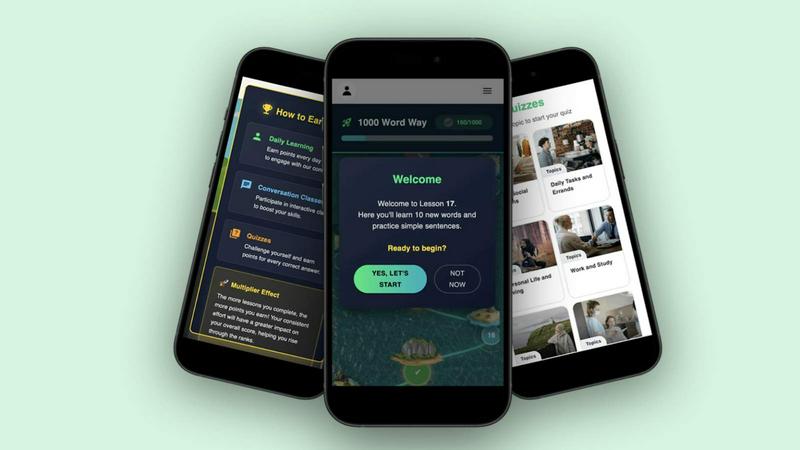
Gaeilgeoir AI is your essential pocket tutor for mastering real Irish conversations through personalized, scenario-based practice.
Last updated: April 13, 2026

Interactive Circle of Fifths
Master scales and chord progressions with this essential, interactive tool for musicians.
Last updated: March 1, 2026
Visual Comparison
Gaeilgeoir AI
Interactive Circle of Fifths
Feature Comparison
Gaeilgeoir AI
Guided Real-World Conversation Practice
This is the heart of the platform and, in my opinion, its killer feature. Instead of robotic drills, you practice through structured, authentic scenarios like ordering food, asking for directions, or talking about your work. The AI guides these interactions, providing a safe space to make mistakes and learn the natural flow of conversation, which is utterly invaluable for building speaking confidence.
Click-to-Save Personalized Study List
A simple yet brilliantly effective tool. As you explore lessons and conversations, you can click on any word to instantly see its translation and, crucially, save it to your own personalized study list. This turns passive learning into active curation, allowing you to build a vocabulary deck tailored exactly to your gaps and interests for efficient review.
1000 Most-Used Words Immersion
Gaeilgeoir AI smartly focuses on high-frequency vocabulary, immersing you in the most common Irish words first. This immersion-first approach is a game-changer for practical comprehension; it helps you understand more of the language you'll actually encounter faster, building a strong and useful foundation rather than a scattered one.
Gamified Progress & Motivation
Learning is hard, and Gaeilgeoir AI tackles the motivation slump head-on with a points system, unlockable multipliers, and a leaderboard. Turning your practice into a game with visible progress and a bit of friendly competition makes daily practice something you look forward to, not a chore you dread.
Interactive Circle of Fifths
Dynamic Circle & Key Exploration
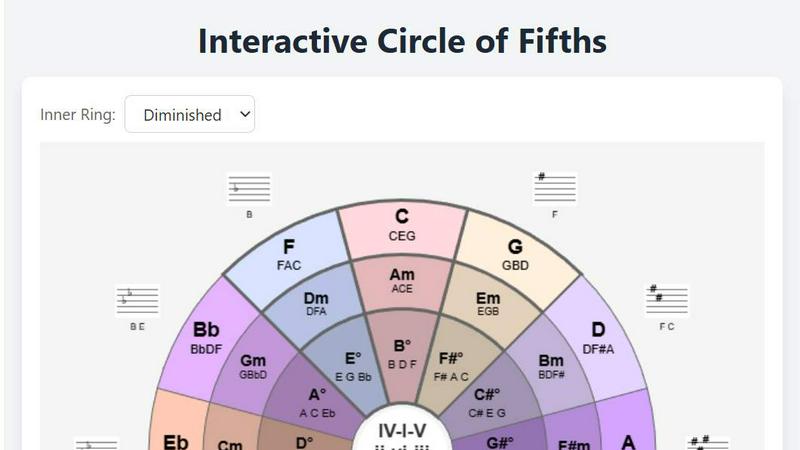
The heart of the tool is its namesake: a fully interactive Circle of Fifths. Click on any key, and the entire interface updates in real-time. This isn't a passive image; it's a control center. Instantly, you see the harmonized scale chords for that key (like C, Dm, Em, etc.), their scale degrees (I, ii, iii), and their functional relationships. It visually demonstrates how moving clockwise around the circle adds sharps, while moving counter-clockwise adds flats, making key signatures intuitive. This dynamic exploration is the fastest way to internalize the relationships that govern all music.
Integrated Piano & Guitar Visualizers
This is, hands down, my favorite feature and a game-changer for practical learning. Once you select a chord or scale, you don't just get its name—you get a clear, color-coded visualization of it on a piano keyboard and a guitar fretboard. It shows you the exact notes and, crucially, the recommended fingerings. For guitarists struggling with barre chords or pianists navigating inversions, this immediate translation from theory to finger placement is invaluable. It turns theoretical knowledge into playable muscle memory instantly.
Comprehensive Scale & Chord Library
The tool goes far beyond basic major and minor. Its inner ring and menus give you direct access to pentatonic scales (the backbone of rock and soloing), the soulful blues scale, diatonic modes, and even the tense, symmetrical diminished scale. It also covers chord types like the diminished chord. This library allows you to understand not just what you're playing, but why it creates a specific mood, making it perfect for composing and improvisation.
Harmonized Scale & Chord Sequencer Panel
This panel is your practical workshop. The "Harmonized Scale" section lays out all the chords native to your chosen key (e.g., I-IV-V-vi), complete with their Roman numeral analysis. The "Chord Sequencer" then lets you audition these chords in any order. You can build and listen to common progressions (like I-V-vi-IV) or experiment with more exotic movements to hear how they resolve. This feature turns the tool from a reference into an active composition and ear-training assistant.
Use Cases
Gaeilgeoir AI
The Heritage Learner Reconnecting
For someone in the Irish diaspora, learning can be an emotional journey. Gaeilgeoir AI is perfect because it goes beyond words to include cultural context, blessings, and everyday phrases that connect you to the living culture. It feels less like studying and more like rediscovering a part of your identity at your own pace.
The Leaving Cert Student in Prep Mode
Facing the Irish oral exam is a major stress point. This platform acts as a 24/7 practice partner, allowing students to drill real-world conversational scenarios repeatedly, receive pronunciation feedback, and build the fluency and confidence needed to excel under exam conditions, all for a fraction of a tutor's cost.
The Busy Adult with 5-Minute Windows
Between work and life, finding hour-long study blocks is impossible. Gaeilgeoir AI thrives here. Its modular lessons and practice sessions are designed for micro-learning. You can squeeze in a quick conversation scenario or review your saved words during a coffee break, maintaining crucial momentum.
The Curious Beginner Overcoming Intimidation
Irish grammar can seem daunting. Gaeilgeoir AI brilliantly lowers the barrier to entry by prioritizing speaking and comprehension from day one. The supportive, scenario-based approach makes the initial leap less scary, proving you can have simple, meaningful interactions quickly, which fuels the desire to learn more.
Interactive Circle of Fifths
Songwriting & Chord Progression Inspiration
Stuck in a creative rut? Use the Chord Sequencer to experiment. Start with a familiar I-IV-V progression in one key, then use the Circle to modulate to a relative minor or a key a fifth away. Hearing the changes in real-time allows you to discover smooth, professional-sounding transitions you might not have found by trial and error on your instrument alone. It’s like having a theory co-writer.
Instrument-Specific Fingering Practice
For students learning a new instrument, this is a practice powerhouse. Instead of searching for separate chord charts or scale diagrams, you can select a scale like "A Minor Pentatonic" and instantly see the box patterns on the guitar neck. You can then cycle through the harmonized chords in that key (Am, Dm, E) and see their chord shapes, all within the same theoretical context, making practice sessions incredibly efficient and focused.
Music Theory Homework & Study Aid
For formal music students, this tool clarifies textbook concepts. Seeing the relationship between, for example, the key of C Major and its relative minor (A Minor) with a single click, and then hearing the difference between their scales and chords, cements understanding. It visually explains scale degrees, chord functions (like which chord "resolves to" another), and modulation in a way static pages cannot.
Improvisation & Solo Development
Improvisers can use it to map out their harmonic landscape. Before a jam in, say, Bb Major, you can quickly review the diatonic chords and then switch to the "Blues Scale" overlay to see which "blue notes" work over the progression. Understanding how the pentatonic or blues scale fits over the underlying chords (shown clearly on your instrument's visualizer) provides a confident roadmap for crafting more melodic and intentional solos.
Overview
About Gaeilgeoir AI
Let's be honest, most language apps leave you fluent in... ordering a coffee and asking where the library is. Not exactly riveting dinner conversation. Gaeilgeoir AI is the refreshing, practical antidote we've been waiting for in the Irish language space. This isn't another flashcard factory; it's an AI-powered platform dedicated to teaching you real Irish for real life. Its core genius is immersion in everyday scenarios—think navigating a chat at the local pub, discussing your weekend, or understanding the nuances of a traditional blessing. It cuts through the academic fog and delivers the living, breathing language. The platform masterfully blends conversational AI practice, which gives you the courage to actually speak, with instant pronunciation feedback and structured grammar guidance that solidifies your learning. Whether you're a member of the diaspora yearning to reconnect, a student sweating the Leaving Cert oral, or a curious beginner who's always been intimidated, Gaeilgeoir AI meets you where you are. It promises—and delivers—on getting you speaking confidently from day one, making the beautiful Irish language accessible, practical, and deeply engaging.
About Interactive Circle of Fifths
Let's be honest: the Circle of Fifths is one of the most powerful yet intimidating concepts in music theory. For years, it's been presented as a static, confusing diagram in textbooks. The Interactive Circle of Fifths changes all of that. This isn't just a chart; it's a dynamic, hands-on learning lab for your ears and fingers. It's designed for anyone with a musical pulse—from the absolute beginner trying to understand why certain chords sound good together, to the seasoned songwriter looking for that elusive next chord in a progression. Its core value proposition is brilliant in its simplicity: it makes the abstract relationships of music theory tangible, visual, and, most importantly, audible. You don't just see that a G chord resolves to C; you can hear it and see exactly how to play it on your instrument. By integrating a comprehensive scale library (from major and minor to blues and diminished) with instant visualizers for piano and guitar, it demystifies the entire framework of Western harmony. This tool is the bridge between knowing theory and actually feeling it in your playing, which is why I consider it an indispensable resource for modern musicians.
Frequently Asked Questions
Gaeilgeoir AI FAQ
Can I use this service if I'm a total beginner?
Absolutely, and I'd argue it's one of the best places to start. The platform is designed to get you speaking from day one with guided, real-world scenarios. It builds your confidence and practical understanding first, while seamlessly integrating grammar and structure as you progress, so you're never thrown into the deep end without support.
How will this tool help me practice for the Leaving Cert Irish oral exam?
It's like having a dedicated oral exam tutor in your pocket. You can practice the exact type of conversational scenarios that come up in the exam—discussing your day, your interests, current events—with instant feedback. The repeated, pressure-free practice builds the automaticity and fluency that examiners look for, making you more confident and prepared.
How are the quizzes different from standard textbook exercises?
The quizzes are built from the immersive, real-world content you've just learned. Instead of testing isolated grammar rules, they assess your comprehension and application within a context, like understanding a short dialogue or choosing the correct phrase for a situation. This tests your functional understanding, not just your memorization skills.
Is this platform appropriate and safe for all ages?
Yes, the content is designed to be safe and appropriate for learners of all ages. The scenarios focus on everyday, practical situations like greetings, social interactions, and cultural topics. There's no inappropriate content, making it a great tool for families, younger students, and adult learners alike.
Interactive Circle of Fifths FAQ
Is the Interactive Circle of Fifths suitable for complete beginners?
Absolutely, and I'd argue it's one of the best starting points. It transforms an abstract concept into a clickable, audible experience. A beginner can simply click on "C Major," hear the scale, see the simple chords (C, F, G), and visualize them on their instrument. It provides context that isolated lessons often lack, building a strong foundational understanding from day one.
Can I use this tool for instruments other than piano and guitar?
While the dedicated visualizers are for piano and guitar, the core theory is universal. The Circle itself, the scale information, chord names, and Roman numeral analysis apply to all melodic instruments (like saxophone, violin, or voice) and are crucial for composers and producers. The tool teaches you the language of music, which you can then apply to any instrument you play.
How does the "Resolves To" function work?
This is a brilliant feature that teaches musical tension and release. When you select a chord (like the V chord, or "dominant"), the tool will indicate which chord it naturally wants to move to (typically the I chord, or "tonic"). This illustrates the fundamental "pull" in harmony that creates satisfying chord progressions. It helps you understand not just chord names, but their dramatic role in a piece of music.
Does it help with learning scales like modes or the blues scale?
Yes, extensively. Beyond major and minor, you can select scales like Dorian or Mixolydian (modes) and see how they relate to the parent key on the Circle. For the blues scale, you can see its unique notes mapped on the fretboard or keyboard over a standard 12-bar blues progression. This contextual learning shows you when and why to use these scales, not just their patterns.
Alternatives
Gaeilgeoir AI Alternatives
Gaeilgeoir AI is a modern, conversational platform designed to teach you real, spoken Irish through AI-powered dialogue. It sits firmly in the language learning and education technology space, focusing on practical immersion over rote memorization. While its approach is highly effective for many, learners often explore other options to find the perfect fit for their specific needs. Common reasons for seeking alternatives include budget constraints, a desire for different features like live tutoring or game-like lessons, or simply needing an app available on a different platform. Some may prefer a more traditional, grammar-first curriculum or seek resources that are entirely free. When evaluating other Irish learning tools, consider your primary goal. Do you need structured exam prep, crave casual conversation practice, or want deep cultural context? Look at the teaching methodology, the type of Irish taught (Connacht, Munster, Ulster), and whether the tool offers the feedback and support you need to stay motivated. The best choice aligns with your learning style and reasons for picking up the language.
Interactive Circle of Fifths Alternatives
The Interactive Circle of Fifths is a standout in the music theory education category, offering a dynamic, visual approach to understanding chords and scales. It’s a tool that turns abstract concepts into something you can see and hear, which is why it’s a favorite among learners. People often search for alternatives for a few key reasons. Maybe the price point doesn’t fit their current budget, or they need an app specifically for their mobile device or desktop. Others might be looking for a tool with a different focus, like pure ear training or advanced composition features, rather than the all-in-one theory hub this product provides. When you’re evaluating other options, think about what you really need. Prioritize a clean, intuitive interface that won’t slow down your learning. Look for tools that offer interactive elements—static diagrams just don’t cut it anymore. Finally, consider the depth of content; the best alternatives will grow with you, from basic triads to complex modal harmony.