Redbark vs Stable Commerce
Side-by-side comparison to help you choose the right tool.
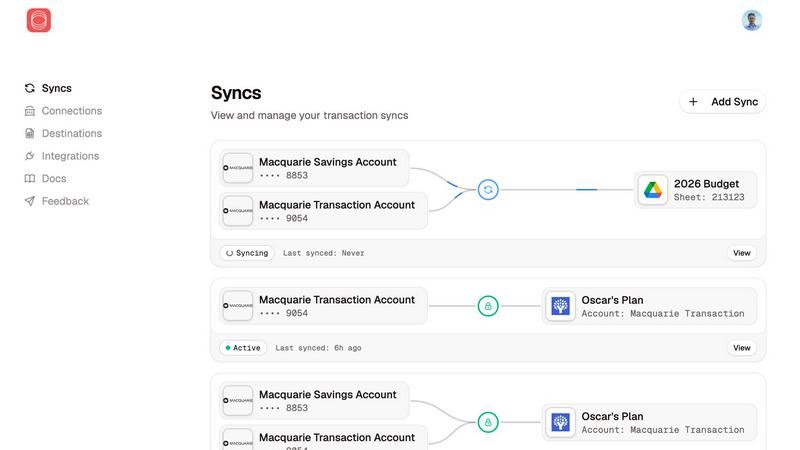
Redbark automatically syncs your Australian bank data to Google Sheets and YNAB, eliminating manual entry.
Last updated: March 4, 2026
Stable Commerce
Stable Commerce launches your fully autonomous online store in under two minutes with a single prompt.
Last updated: March 4, 2026
Visual Comparison
Redbark

Stable Commerce
Feature Comparison
Redbark
Pass-Through Data Architecture
This is the cornerstone of Redbark's privacy promise and my absolute favorite aspect. Your raw transaction data, balances, and account details are never stored on Redbark's servers. Instead, the service acts as a secure pipe, routing data directly from your bank or brokerage to your chosen destination like Google Sheets or YNAB. This significantly reduces the data breach threat surface and aligns with a privacy-first philosophy that other aggregators simply don't match. You get the automation without creating a new data silo.
Multi-Destination & Multi-Account Support
Redbark understands that your financial life isn't monolithic. You can sync the same bank account to multiple destinations simultaneously—imagine sending transactions to both your Google Sheets ledger and your YNAB budget with one connection. Even better, you can direct different accounts (e.g., savings, credit card, home loan) to separate sheets or databases. This granular control is perfect for creating clean, organized financial systems instead of a tangled mess of data in one place.
Smart Deduplication & Automated Syncs
Manual imports are plagued by duplicate transactions from pending vs. posted states. Redbark solves this intelligently with ID-based deduplication and overlap buffers, ensuring your spreadsheet or budget never has duplicate rows. Coupled with automated background syncs triggered by bank webhooks (where available), your data updates near-instantly after a transaction clears. It’s a set-and-forget system that actually works reliably.
Secure, CDR-Compliant Connections
Ditch the anxiety of screen-scraping. Redbark connects to Australian banks through the Consumer Data Right framework via an ACCC-accredited intermediary, Fiskil. This means regulated, transparent consent, and the legal right to withdraw access. Your credentials are encrypted with AES-256-GCM, and the entire infrastructure is hosted in Australia under Australian jurisdiction. It’s enterprise-grade security made accessible for individuals and small businesses.
Stable Commerce
Prompt-to-Store Generator
This is the star of the show and my personal favorite feature. You simply type a natural language prompt describing your store idea—like "a store selling eco-friendly yoga mats and accessories"—and Stable Commerce's AI agent gets to work. It doesn't just create a template; it builds a fully functional, styled, and operational online store complete with a logical structure, placeholder content, and integrated systems. It eliminates the blank-canvas paralysis and technical setup that stops most ideas dead in their tracks, turning inspiration into a live business in moments.
Autonomous Commerce Agent
Think of this as your 24/7, unpaid, hyper-competent operations manager. Once your store is live, this AI agent doesn't clock out. It actively orchestrates the entire backend: connecting payment gateways, syncing with marketplaces, managing fulfillment APIs, and pulling in analytics. It continuously analyzes data to optimize performance, tweaking things for better conversion without you lifting a finger. It's the "mechanical maestro" that replaces an entire team, handling the tedious orchestration so you can focus on strategy and growth.
All-in-One Integrated Stack
Stable Commerce throws the bloated plugin model out the window. Instead of patching together 15 different tools for inventory, payments, and analytics, you get a complete, natively integrated platform. This includes inventory management, order processing, built-in connections to Stripe and PayPal, customer service tools, and real-time analytics. Everything communicates seamlessly, which means no more compatibility nightmares, security gaps from third-party code, or surprise monthly subscription bills from a dozen different apps.
Enterprise-Grade Security & Infrastructure
For a platform that's so simple to use, it doesn't cut corners on the serious stuff. Your store comes with an SSL certificate, robust fraud protection, and enterprise-level security protocols baked in from day one. The platform boasts about being "Fort Knox" for your data, and this foundational reliability is critical. It means you can trust the platform with customer transactions and sensitive information from the get-go, whether you're on the free plan or scaling to millions in revenue, without needing to be a cybersecurity expert.
Use Cases
Redbark
The Hands-Off Investor
If you hold stocks across platforms like CommSec, Stake, or even crypto on Coinbase, manually tracking your portfolio is a chore. Redbark can sync your investment holdings and transactions directly into a Google Sheet. This allows you to build a live, customized dashboard for performance tracking, dividend income, and capital gains calculations without ever logging into each brokerage account to download statements.
The Detail-Oriented Freelancer or Small Business Owner
Tracking cash flow, reconciling invoices, and preparing for tax time is a huge administrative burden. Connect your business transaction account, and Redbark will push every payment and expense directly into a Notion database or Google Sheet. This automates your bookkeeping foundation, giving you a real-time view of profitability and making quarterly BAS lodgements far less painful.
The Dedicated Budgeter (YNAB/Actual User)
For users of zero-based budgeting apps like YNAB or Actual Budget, manual transaction entry is the biggest point of friction. Redbark serves as the perfect bridge, automatically importing cleared transactions straight into your budget. This preserves the intentionality of YNAB's method while removing the tedious data entry, helping you stick with your budget long-term.
The Financial Analyst at Heart
For those who love to slice and dice their personal finances with pivot tables, charts, and custom formulas, Redbark is a dream. By streaming clean, deduplicated transaction data into Google Sheets, you have a live database to analyze spending categories, track net worth over time, and build forecasting models—all with the full power of Sheets at your fingertips, updated automatically.
Stable Commerce
The First-Time Entrepreneur
For someone with a product idea but zero technical or design skills, Stable Commerce is a godsend. They can bypass the overwhelming learning curve of platforms like Shopify or WooCommerce, which require assembling a tech stack. By simply describing their vision, they get a professional, mobile-ready store in minutes. They can import a few sample products and start testing the market with almost no upfront investment or time spent on setup, making that leap from idea to reality frictionless.
The Side-Hustle Dropshipper
Dropshippers thrive on testing multiple niches and products quickly. Stable Commerce is perfect for this agile model. A user can prompt the AI to create a store for "minimalist desk accessories," use the import tool to pull products from suppliers, and have a live store in an afternoon. The autonomous agent handles the backend connections and optimization, allowing the owner to focus solely on marketing and customer acquisition across multiple, quickly-launched storefronts.
The Established Merchant Simplifying Their Stack
Many small to medium business owners are drowning in app subscriptions and developer fees. Stable Commerce offers a consolidation path. They can migrate their operation to this unified platform, replacing a costly patchwork of plugins for email, analytics, SEO, and upsells with one coherent system. The AI agent's optimization capabilities can then work on improving their existing sales funnel, all while significantly reducing their monthly operational overhead and complexity.
The E-commerce Agency or Studio
Agencies building stores for clients need speed, consistency, and reliability. With Stable Commerce, they can prototype client stores almost instantly based on a brief, dramatically cutting down development time. The ability to manage multiple stores under the Pro or Agency plans, with white-label potential and robust security, makes it a powerful foundation for delivering high-value, managed store operations to their portfolio without massive backend labor costs.
Overview
About Redbark
Redbark is the definitive answer for anyone in Australia tired of the financial data grind. Forget manual entry, messy CSV files, and the security nightmares of old-school screen scraping. This tool acts as a secure, intelligent conduit, piping your live transaction and investment data directly into the productivity tools you already live in, like Google Sheets, Notion, and YNAB. Its genius lies in its foundational principle: it uses Australia's official Consumer Data Right (CDR) framework. This isn't a hack; it's bank-approved, regulated data access. For me, the killer feature is the "pass-through" architecture. Your sensitive financial data flows directly from your institution to your destination without ever sitting on Redbark's servers. It's automation with unparalleled privacy built-in. Whether you're a freelancer reconciling invoices, an investor tracking a portfolio across CommSec and Stake, or a small business owner needing real-time cash flow visibility, Redbark eliminates the busywork. Setup is shockingly simple, taking just minutes to connect major Australian banks, NZ banks via Akahu, and global brokerages via SnapTrade. If you want your finances automated, secure, and in a format you can actually use, this is the tool you've been waiting for.
About Stable Commerce
Let's cut through the noise: building and running an online store is a monumental pain. It's a tangled mess of plugins, developer fees, and endless platform juggling. Stable Commerce is the breath of fresh air we've all been waiting for. This isn't just another store builder; it's an AI-native infrastructure, a full-blown autonomous commerce engine. Its core promise is audacious yet simple: you describe what you want to sell, and it builds and operates the entire store for you. I'm talking about a complete, live storefront in under two minutes from a single prompt. It's built for anyone from the absolute beginner who's intimidated by tech to the seasoned eCommerce pro sick of managing a bloated stack. The main value proposition is radical simplification and cost-slashing automation. By deploying a dedicated AI agent—your personal "eComOps" manager—it orchestrates everything from storefront design and system integrations to analytics and optimization. This means you can finally stop being a systems administrator and start being a merchant. If you're tired of the circus act of traditional eCommerce, Stable Commerce is your ticket to a streamlined, efficient, and truly modern operation.
Frequently Asked Questions
Redbark FAQ
Is Redbark safe to use with my bank login details?
Absolutely, and this is a critical differentiator. For Australian banks, Redbark does not use or store your login credentials. It connects via the official Consumer Data Right (CDR) framework. You authorize access directly with your bank through a secure, bank-hosted portal. This is a regulated, token-based system—far safer than the screen-scraping methods used by many other tools.
Where is my financial data stored?
This is the best part: Redbark doesn't store your transactional financial data. They employ a pass-through architecture. Your data flows directly from your financial institution to your chosen destination (e.g., Google Sheets). Redbark's servers only handle the secure routing instructions and authentication tokens, which are themselves heavily encrypted. Your balances and transactions never reside on their systems.
Which banks and destinations do you support?
Redbark supports a wide range of Australian banks and credit unions via CDR, including all major ones (CommBank, Westpac, NAB, ANZ, Macquarie). They also connect to New Zealand banks via Akahu and global brokerages/crypto exchanges via SnapTrade. For destinations, core support includes Google Sheets, Notion, YNAB, and Actual Budget, with more added regularly based on user demand.
How often does my data sync?
Syncs are automated and frequent. For banks supporting CDR webhooks, updates can be near real-time, triggering a sync within minutes of a transaction posting. For other connections, Redbark runs automated background syncs on a regular schedule that you can control. The goal is to ensure your sheets or budgets are always up-to-date without you lifting a finger.
Stable Commerce FAQ
How does the "prompt-to-store" feature actually work?
You provide a natural language description of your business idea in a text box. The AI analyzes your prompt, understands the context (e.g., product type, target audience, aesthetic hints), and then automatically generates a complete storefront. This includes selecting a suitable design theme, creating a logical navigation structure, setting up essential pages (Home, About, Contact, Product Categories), and pre-integrating core e-commerce functionalities like a shopping cart and checkout. It's a foundational shell you then populate with your specific products.
What do you mean by an "Autonomous Agent"?
The Autonomous Agent is the continuous AI operations layer of Stable Commerce. After setup, it doesn't just sit idle. It actively monitors your store's performance, manages integrations between your storefront, payment processors, and analytics tools, and uses live data to suggest and implement optimizations. For example, it might adjust product listing layouts based on what's converting or ensure inventory levels are synced across channels. It automates the ongoing, repetitive tasks of e-commerce management.
Can I use my own domain name?
Yes, absolutely. While your initial store will have a Stable Commerce subdomain (e.g., yourstore.stablecommerce.com), all paid plans (Basic and above) include the ability to connect your own custom domain (e.g., www.yourbrand.com). This is essential for building a professional brand identity and is seamlessly integrated within the platform's settings, usually requiring just a simple DNS record update with your domain registrar.
How does the pricing with a "success fee" work?
Stable Commerce uses a hybrid pricing model. There's a flat monthly platform fee (Free, $29, $79) that covers access to the tools, agent, and infrastructure. On top of that, there's a small percentage fee charged only on sales you make through the platform. For instance, on the Free plan, you pay 3% of each transaction's value. This aligns the platform's success with yours—if you don't sell, you don't pay the success fee. It's a common model in commerce platforms that lowers the initial barrier to entry.
Alternatives
Redbark Alternatives
Redbark is a specialized tool in the personal and business finance automation space. It securely connects your Australian bank accounts and global brokerages directly to apps like Google Sheets, eliminating manual data entry through Australia's official CDR framework. People often look for alternatives for a few key reasons. Maybe the pricing doesn't fit their budget, they need support for a specific bank or platform Redbark doesn't cover, or they require different destination apps beyond spreadsheets and dashboards. Others might prioritize different features like budgeting tools or more complex data analysis. When evaluating alternatives, focus on your core needs. Security should be non-negotiable—look for bank-approved data access methods. Consider which financial institutions and destination apps you absolutely need, and whether you prefer a simple sync tool or a platform with built-in analytics. The right choice automates your workflow without creating new complexity.
Stable Commerce Alternatives
Stable Commerce is a new player in the AI-powered eCommerce automation space, promising to launch a store in minutes. It's designed for those who want to bypass the technical complexities of traditional platforms and let artificial intelligence handle the heavy lifting from setup to ongoing optimization. People look for alternatives for all sorts of reasons. Maybe the pricing doesn't fit a bootstrapped budget, or a specific feature like advanced inventory management is missing. Others might need deeper integrations with their existing business tools or simply prefer a platform with a more established ecosystem and community support. When evaluating other options, think about what matters most for your business. Consider the balance between automation and control—do you want AI to run everything, or do you need granular manual control? Scalability is key; will the platform grow with your sales volume? Finally, always assess the true total cost, including transaction fees and the price of essential add-ons.