
CloneUI vs Postproxy
Side-by-side comparison to help you choose the right tool.

CloneUI
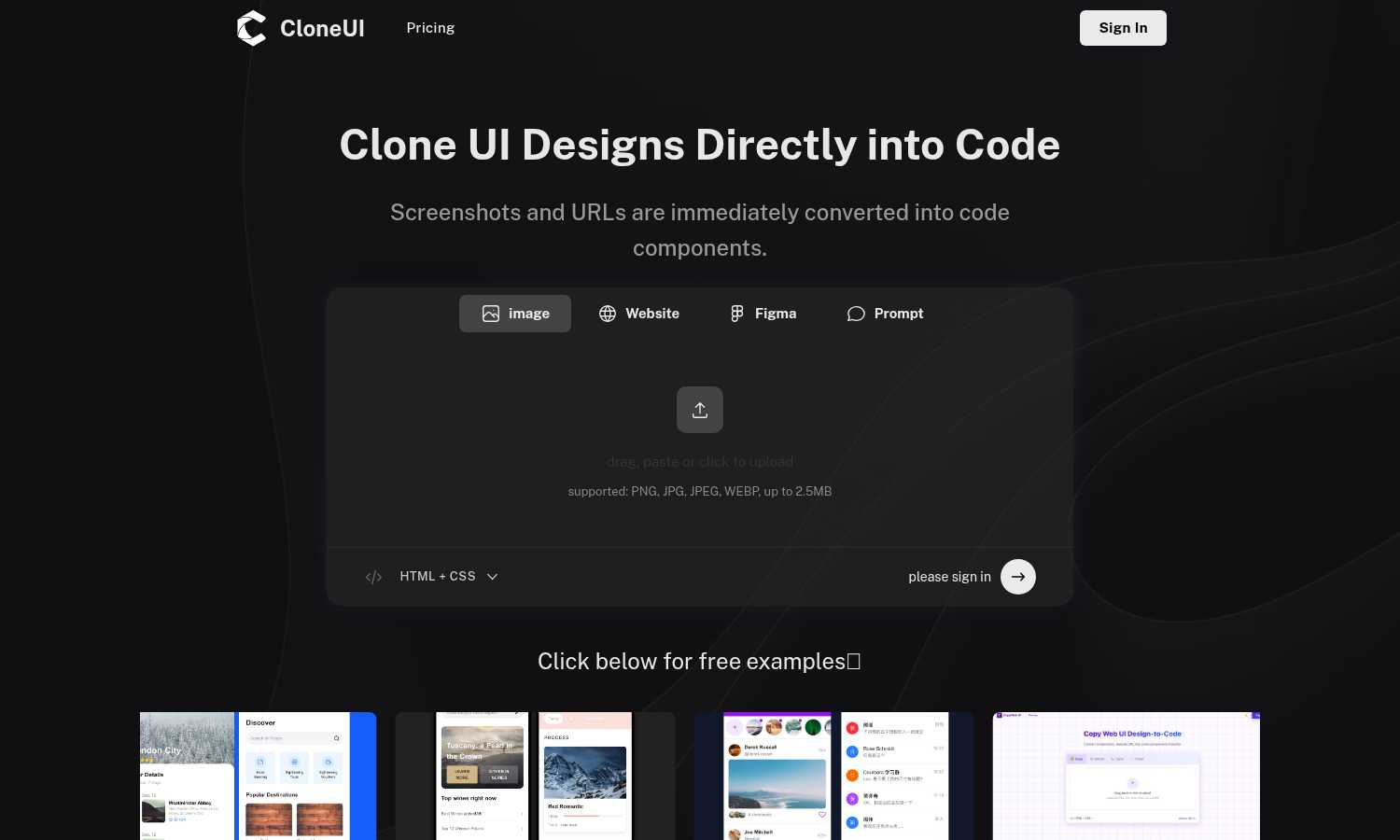
CloneUI instantly converts your screenshots and URLs into clean, production-ready code for any framework.
Last updated: March 1, 2026

Postproxy
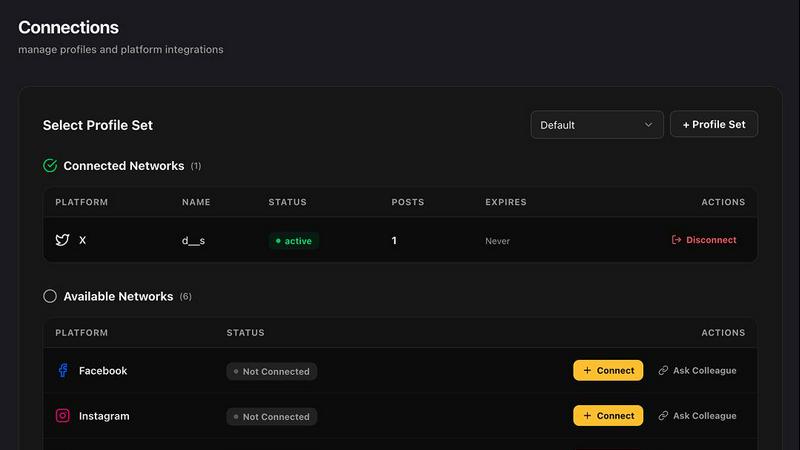
Streamline your social media publishing with Postproxy's unified API for effortless, cross-platform content delivery.
Last updated: February 28, 2026
Visual Comparison
CloneUI
Postproxy
Feature Comparison
CloneUI
Multi-Format Input Flexibility
CloneUI shines by accepting design input from virtually any source you work with. You can drag-and-drop a PNG/JPG screenshot, directly connect to your Figma files, or simply paste a live website URL. This flexibility is a game-changer, allowing you to work from a static inspiration image, a polished design mockup, or an existing site you need to replicate or draw inspiration from, all within the same streamlined workflow.
AI-Powered Component Recognition
This is where the magic truly happens. The tool's AI doesn't just look at pixels; it intelligently analyzes the visual hierarchy and structure to identify common UI patterns. It maps out buttons, navigation bars, cards, and forms, understanding their purpose and relationships. This intelligent parsing is what transforms a flat image into a structured, logical codebase with proper semantic HTML elements, rather than a chaotic nest of meaningless divs.
Framework-Specific Code Export
Once the AI has done its analysis, you're not locked into one output. CloneUI provides a crucial one-click export to your framework of choice: clean vanilla HTML/CSS for simple projects, or fully-fledged component code for React or Vue.js. This feature alone saves hours of manual conversion work and ensures the generated code fits seamlessly into your existing tech stack and development environment.
Built-In Responsiveness
Forget about generating code that only looks good on a desktop. Every line of code produced by CloneUI is built with responsiveness as a core principle. The generated CSS uses modern techniques like Flexbox or CSS Grid to ensure the cloned interface adapts fluidly and elegantly to any screen size, from mobile to desktop, providing a mobile-friendly foundation right out of the gate.
Postproxy
Unified API
Postproxy provides a single API endpoint that simplifies the complex process of publishing content to various social media platforms. This eliminates the need for multiple integrations and reduces the operational mess associated with platform-specific publishing.
Automated Content Adaptation
With Postproxy, your content is automatically transformed to meet the unique requirements of each social media platform. This means formats, media limits, and text validations are handled seamlessly, ensuring that your posts look great everywhere.
Robust Error Handling
Operational failures are managed by design in Postproxy. It automatically retries failed requests, respects rate limits, and maintains awareness of quotas, allowing for a smoother publishing experience without manual intervention.
Detailed Publish States
Postproxy provides explicit feedback on the status of your posts. You always know what succeeded, what failed, and the reasons behind any issues without needing to conduct manual checks, giving you peace of mind during the publishing process.
Use Cases
CloneUI
Rapid Prototyping for Freelancers & Agencies
When a client has a vague idea or points to a competitor's site saying "make it like this," CloneUI is your secret weapon. You can instantly generate a working, interactive prototype from a screenshot or URL, transforming abstract concepts into tangible demos in minutes. This accelerates client feedback loops, secures buy-in faster, and lets you focus on unique value instead of rebuilding common layouts from zero.
Accelerating Front-End Development Workflow
For front-end developers, the manual translation of finalized designs is often the most tedious part of the job. CloneUI automates this grunt work. By generating a robust, semantic code foundation from a Figma file, developers can skip the initial hours of structuring HTML and basic CSS. They can immediately dive into adding logic, interactivity, and polishing the unique features that matter most.
Creating Consistent Design System Components
If you need to replicate a specific UI component—like a complex card, a unique navbar, or a pricing table—across multiple pages or projects, CloneUI is perfect. Simply screenshot the component, generate the code, and you have a clean, reusable starting point. This ensures visual consistency and saves you from reinventing the wheel for every common interface element.
Learning & Reverse Engineering Code
For developers looking to learn how a particular visual effect or layout is achieved on a live website, CloneUI serves as an incredible educational tool. By inputting a URL, you can instantly see the clean HTML and CSS structure behind it. This demystifies complex implementations and provides practical, real-world code examples to study and learn from.
Postproxy
Social Media Managers
Social media managers can leverage Postproxy to publish content across multiple platforms efficiently. By using a single API, they can schedule and manage posts without worrying about the quirks of each platform, allowing them to focus on content strategy.
Marketing Automation
Postproxy is ideal for marketing teams that utilize automation tools like Zapier and n8n. They can create workflows that automatically publish content based on specific triggers, reducing manual work and ensuring timely delivery of marketing messages.
Content Creators
For content creators looking to share their work across various social networks, Postproxy simplifies the process. They can generate content quickly and publish it to multiple platforms without needing to tailor each post individually.
Developers Building Custom Solutions
Developers can integrate Postproxy into their applications to provide users with a seamless social publishing experience. This allows them to focus on enhancing functionality while Postproxy manages the complexities of social media integrations.
Overview
About CloneUI
CloneUI isn't just another code generator; it's the definitive bridge between the visual world of design and the functional world of development. As someone who has manually translated countless Figma frames and website screenshots into code, I can confidently say this tool is a revelation. Its core promise is intoxicatingly simple yet profoundly powerful: feed it a screenshot, a Figma design file, or a live website URL, and its AI engine delivers clean, responsive, and production-ready HTML, CSS, and even React or Vue components. This isn't about spitting out a messy, unmaintainable div soup. CloneUI generates a structured, semantic foundation that respects modern development practices, meaning developers can actually build upon and customize the output instead of rewriting it from scratch. It's tailor-made for front-end developers drowning in repetitive pixel-pushing, freelancers who need to prototype client concepts at breakneck speed, and product teams aiming to turn static mockups into interactive prototypes without creating a bottleneck for their engineering resources. If you're tired of the tedious manual reconstruction of visual designs, CloneUI is the powerful ally you've been waiting for, prioritizing radical efficiency without ever sacrificing code quality.
About Postproxy
Postproxy is a powerful API designed to simplify and streamline social media publishing across multiple platforms, including Instagram, Facebook, YouTube, LinkedIn, and X. By providing a unified endpoint, Postproxy eliminates the hassle of managing individual integrations, saving developers and marketers valuable time and effort. This tool is ideal for developers, automators, and businesses that rely on platforms like n8n, Zapier, and CI/CD systems to manage their content workflows. The main value proposition of Postproxy lies in its ability to automate OAuth, handle rate limits, manage retries, adapt content, and offer analytics, turning what is often a chaotic publishing environment into a predictable and reliable infrastructure. With a free plan available, Postproxy is accessible for businesses at any stage of growth, making it an invaluable resource for scaling social media operations efficiently.
Frequently Asked Questions
CloneUI FAQ
Which input formats are compatible with CloneUI?
CloneUI supports a versatile range of inputs to fit your workflow. You can directly upload image files (PNG, JPG, JPEG, WEBP up to 2.5MB), connect and import designs from Figma, or simply paste the URL of any live website. This multi-format approach ensures you can generate code from almost any visual source material.
How is the code generated?
The code is generated through a sophisticated AI engine that performs visual analysis on your input. It doesn't just capture pixels; it intelligently identifies UI components, understands their spatial relationships, and infers the underlying HTML structure and CSS styling required to recreate the design faithfully, resulting in clean, semantic, and well-organized code.
What frameworks does CloneUI support for export?
CloneUI offers flexible export options to suit different project needs. You can export the generated code as standard HTML and CSS, or as framework-specific components for two of the most popular front-end libraries: React and Vue.js. This allows you to integrate the output directly into your preferred development stack.
Is the generated code suitable for production use?
Absolutely. A key differentiator for CloneUI is its focus on generating production-ready code, not just a rough proof-of-concept. The output is clean, semantic, responsive, and structured as a solid foundation. While developers will typically add business logic and further customization, the base HTML/CSS is of a high quality that can be directly used or built upon for live projects.
Postproxy FAQ
How does Postproxy handle platform-specific rules?
Postproxy automatically adapts content to meet the diverse requirements of each social media platform, ensuring compliance with format, media limits, and text validation.
Is there a free plan available for Postproxy?
Yes, Postproxy offers a free plan that allows users to get started without any upfront costs, making it accessible for businesses of all sizes.
What types of media can I publish using Postproxy?
Postproxy supports various media types, including images, videos, and text posts, allowing for rich content publishing across social platforms.
How do I get started with Postproxy?
To get started, simply create a Postproxy account, generate an API key, connect your social media accounts, and begin publishing content via the unified API.
Alternatives
CloneUI Alternatives
CloneUI is a standout in the category of AI-powered design-to-code tools. It takes a screenshot, Figma file, or URL and generates clean, production-ready HTML, CSS, and component code, acting as a powerful accelerator for developers and designers. Users often seek alternatives for a variety of reasons. Budget is a primary driver, as some may need a free tier or different pricing model. Others might require specific integrations, like direct plugin support for their design tool of choice, or they may be looking for a tool that outputs code for a particular framework or stack that isn't currently supported. When evaluating alternatives, focus on the core value: the quality of the generated code. Look for tools that produce semantic, maintainable, and responsive code, not just a visual replica. Also, consider the input flexibility (does it accept images, URLs, or design file imports?) and the learning curve. The best tool is one that seamlessly fits into your existing workflow without creating new bottlenecks.
Postproxy Alternatives
Postproxy is a robust publishing tool designed for developers and automators, allowing users to manage posts across multiple social media platforms like Instagram, Facebook, YouTube, LinkedIn, and X through a single API. This solution simplifies the often chaotic process of social media publishing by automating OAuth, managing rate limits, and providing analytics, making it an essential tool in the design tools category. As users explore the market, they may seek alternatives to Postproxy for various reasons, such as pricing structures, feature sets, or specific platform compatibility. It's crucial to consider the unique needs of your projects when looking for an alternative. Factors like ease of integration, scalability, and customer support can significantly influence your choice, so take the time to evaluate each option against your requirements.