Fusedash vs Stable Commerce
Side-by-side comparison to help you choose the right tool.
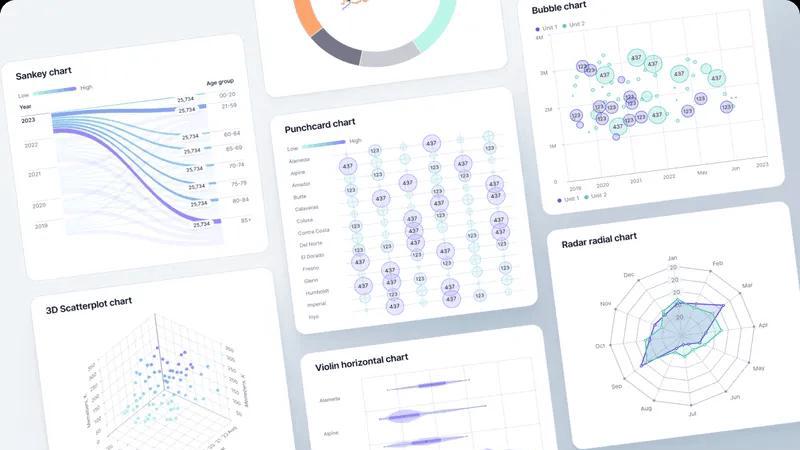
Fusedash transforms raw data into intuitive dashboards and charts, empowering teams to act on insights instantly.
Last updated: March 4, 2026
Stable Commerce
Stable Commerce launches your fully autonomous online store in under two minutes with a single prompt.
Last updated: March 4, 2026
Visual Comparison
Fusedash

Stable Commerce
Feature Comparison
Fusedash
Flexible Views
Fusedash allows you to create tailored dashboard views for different audiences. Whether you need dashboards, charts, maps, or report-style presentations, you can customize layouts, filters, and time ranges, ensuring stakeholders see exactly what they need without unnecessary back and forth.
AI Chart Generator
With the AI Chart Generator, you can quickly create clear visuals from your CSV files or APIs in mere minutes. This feature enables you to select the right chart type, apply comparisons, and refine labels, streamlining the reporting process while ensuring that your charts effectively convey the intended narrative.
Dashboard Software
Fusedash provides a comprehensive workspace for dashboards and reporting, allowing teams to combine KPIs with narrative elements. This integration helps stakeholders understand not just the numbers, but also the context behind them, reducing the risk of conflicting information and keeping teams aligned.
AI Chat
The Smart Chat feature leverages AI to facilitate data exploration. Users can ask questions in plain language, receive suggestions for relevant metrics and charts, and easily transform insights into shareable dashboard views, making data analysis more intuitive and collaborative.
Stable Commerce
Prompt-to-Store Generator
This is the star of the show and my personal favorite feature. You simply type a natural language prompt describing your store idea—like "a store selling eco-friendly yoga mats and accessories"—and Stable Commerce's AI agent gets to work. It doesn't just create a template; it builds a fully functional, styled, and operational online store complete with a logical structure, placeholder content, and integrated systems. It eliminates the blank-canvas paralysis and technical setup that stops most ideas dead in their tracks, turning inspiration into a live business in moments.
Autonomous Commerce Agent
Think of this as your 24/7, unpaid, hyper-competent operations manager. Once your store is live, this AI agent doesn't clock out. It actively orchestrates the entire backend: connecting payment gateways, syncing with marketplaces, managing fulfillment APIs, and pulling in analytics. It continuously analyzes data to optimize performance, tweaking things for better conversion without you lifting a finger. It's the "mechanical maestro" that replaces an entire team, handling the tedious orchestration so you can focus on strategy and growth.
All-in-One Integrated Stack
Stable Commerce throws the bloated plugin model out the window. Instead of patching together 15 different tools for inventory, payments, and analytics, you get a complete, natively integrated platform. This includes inventory management, order processing, built-in connections to Stripe and PayPal, customer service tools, and real-time analytics. Everything communicates seamlessly, which means no more compatibility nightmares, security gaps from third-party code, or surprise monthly subscription bills from a dozen different apps.
Enterprise-Grade Security & Infrastructure
For a platform that's so simple to use, it doesn't cut corners on the serious stuff. Your store comes with an SSL certificate, robust fraud protection, and enterprise-level security protocols baked in from day one. The platform boasts about being "Fort Knox" for your data, and this foundational reliability is critical. It means you can trust the platform with customer transactions and sensitive information from the get-go, whether you're on the free plan or scaling to millions in revenue, without needing to be a cybersecurity expert.
Use Cases
Fusedash
Marketing Performance Tracking
Marketing teams can utilize Fusedash to monitor campaign performance in real-time. By visualizing key metrics and KPIs in customizable dashboards, marketers can quickly assess what strategies are working and adjust their tactics accordingly.
Sales Insights and Forecasting
Sales departments can leverage Fusedash to create detailed reports and dashboards that highlight sales trends and forecasts. With the ability to drill down into segments and time periods, sales teams can better understand their performance and make data-driven decisions.
Operational Efficiency Monitoring
Operations teams can use Fusedash to track efficiency metrics, such as production rates or supply chain performance. The platform's ability to visualize data from various sources allows for comprehensive analysis, leading to improved operational strategies.
Financial Reporting and Analysis
Finance teams can benefit from Fusedash by streamlining their reporting processes. By consolidating financial data into a single view and utilizing narrative reporting alongside traditional dashboards, finance professionals can provide stakeholders with clear insights and actionable recommendations.
Stable Commerce
The First-Time Entrepreneur
For someone with a product idea but zero technical or design skills, Stable Commerce is a godsend. They can bypass the overwhelming learning curve of platforms like Shopify or WooCommerce, which require assembling a tech stack. By simply describing their vision, they get a professional, mobile-ready store in minutes. They can import a few sample products and start testing the market with almost no upfront investment or time spent on setup, making that leap from idea to reality frictionless.
The Side-Hustle Dropshipper
Dropshippers thrive on testing multiple niches and products quickly. Stable Commerce is perfect for this agile model. A user can prompt the AI to create a store for "minimalist desk accessories," use the import tool to pull products from suppliers, and have a live store in an afternoon. The autonomous agent handles the backend connections and optimization, allowing the owner to focus solely on marketing and customer acquisition across multiple, quickly-launched storefronts.
The Established Merchant Simplifying Their Stack
Many small to medium business owners are drowning in app subscriptions and developer fees. Stable Commerce offers a consolidation path. They can migrate their operation to this unified platform, replacing a costly patchwork of plugins for email, analytics, SEO, and upsells with one coherent system. The AI agent's optimization capabilities can then work on improving their existing sales funnel, all while significantly reducing their monthly operational overhead and complexity.
The E-commerce Agency or Studio
Agencies building stores for clients need speed, consistency, and reliability. With Stable Commerce, they can prototype client stores almost instantly based on a brief, dramatically cutting down development time. The ability to manage multiple stores under the Pro or Agency plans, with white-label potential and robust security, makes it a powerful foundation for delivering high-value, managed store operations to their portfolio without massive backend labor costs.
Overview
About Fusedash
Fusedash is an innovative AI-powered data visualization platform that revolutionizes how teams interpret and act on their data. Designed for organizations that struggle with disparate data sources and inefficient reporting processes, Fusedash offers a unified workspace for creating insightful dashboards, interactive charts, detailed maps, and narrative reports. The platform stands out by allowing users to define key performance indicators (KPIs) and metrics once, ensuring that everyone across departments is aligned on the same trusted data. This eliminates the frustration of conflicting reports and manual data compilations. Whether you are in leadership, marketing, or operations, Fusedash empowers you to monitor real-time data and understand the underlying trends driving your business decisions. By integrating AI features such as natural language data chat and smart visualization assistance, Fusedash not only accelerates data exploration but also enhances accessibility, transforming raw data into actionable insights that foster alignment and drive strategic initiatives.
About Stable Commerce
Let's cut through the noise: building and running an online store is a monumental pain. It's a tangled mess of plugins, developer fees, and endless platform juggling. Stable Commerce is the breath of fresh air we've all been waiting for. This isn't just another store builder; it's an AI-native infrastructure, a full-blown autonomous commerce engine. Its core promise is audacious yet simple: you describe what you want to sell, and it builds and operates the entire store for you. I'm talking about a complete, live storefront in under two minutes from a single prompt. It's built for anyone from the absolute beginner who's intimidated by tech to the seasoned eCommerce pro sick of managing a bloated stack. The main value proposition is radical simplification and cost-slashing automation. By deploying a dedicated AI agent—your personal "eComOps" manager—it orchestrates everything from storefront design and system integrations to analytics and optimization. This means you can finally stop being a systems administrator and start being a merchant. If you're tired of the circus act of traditional eCommerce, Stable Commerce is your ticket to a streamlined, efficient, and truly modern operation.
Frequently Asked Questions
Fusedash FAQ
What types of data can I use with Fusedash?
Fusedash supports various data sources, including CSV uploads and API connections. This flexibility allows you to integrate diverse datasets into a unified workspace for comprehensive analysis.
How does Fusedash ensure data consistency across reports?
Fusedash allows users to define KPIs and metrics once and reuse them across dashboards, charts, and reports. This eliminates discrepancies and ensures that all teams are aligned on the same data.
Can I customize the visualizations in Fusedash?
Yes, Fusedash provides extensive customization options for visualizations. You can tailor layouts, filters, and chart types to meet the specific needs of different stakeholders, enhancing the clarity and relevance of your data presentations.
Is there a learning curve for using Fusedash?
Fusedash is designed with user-friendliness in mind, featuring intuitive interfaces and AI-powered tools. While new users may require some time to familiarize themselves, the platform's comprehensive resources and support help facilitate a smooth onboarding process.
Stable Commerce FAQ
How does the "prompt-to-store" feature actually work?
You provide a natural language description of your business idea in a text box. The AI analyzes your prompt, understands the context (e.g., product type, target audience, aesthetic hints), and then automatically generates a complete storefront. This includes selecting a suitable design theme, creating a logical navigation structure, setting up essential pages (Home, About, Contact, Product Categories), and pre-integrating core e-commerce functionalities like a shopping cart and checkout. It's a foundational shell you then populate with your specific products.
What do you mean by an "Autonomous Agent"?
The Autonomous Agent is the continuous AI operations layer of Stable Commerce. After setup, it doesn't just sit idle. It actively monitors your store's performance, manages integrations between your storefront, payment processors, and analytics tools, and uses live data to suggest and implement optimizations. For example, it might adjust product listing layouts based on what's converting or ensure inventory levels are synced across channels. It automates the ongoing, repetitive tasks of e-commerce management.
Can I use my own domain name?
Yes, absolutely. While your initial store will have a Stable Commerce subdomain (e.g., yourstore.stablecommerce.com), all paid plans (Basic and above) include the ability to connect your own custom domain (e.g., www.yourbrand.com). This is essential for building a professional brand identity and is seamlessly integrated within the platform's settings, usually requiring just a simple DNS record update with your domain registrar.
How does the pricing with a "success fee" work?
Stable Commerce uses a hybrid pricing model. There's a flat monthly platform fee (Free, $29, $79) that covers access to the tools, agent, and infrastructure. On top of that, there's a small percentage fee charged only on sales you make through the platform. For instance, on the Free plan, you pay 3% of each transaction's value. This aligns the platform's success with yours—if you don't sell, you don't pay the success fee. It's a common model in commerce platforms that lowers the initial barrier to entry.
Alternatives
Fusedash Alternatives
Fusedash is an AI-powered data visualization platform that enables teams to transform raw data into actionable insights through clear dashboards and charts. As part of the Analytics & Data and Business Intelligence categories, it aims to streamline data reporting and foster alignment across organizations by ensuring that everyone is working from the same set of trusted metrics. Users often seek alternatives to Fusedash for a variety of reasons, including pricing considerations, specific feature sets, or compatibility with their existing platforms. When searching for an alternative, it's essential to assess the platform's ability to deliver real-time data insights, the flexibility in visualizations, and the overall ease of use to ensure it meets your team's unique needs and enhances decision-making processes.
Stable Commerce Alternatives
Stable Commerce is a new player in the AI-powered eCommerce automation space, promising to launch a store in minutes. It's designed for those who want to bypass the technical complexities of traditional platforms and let artificial intelligence handle the heavy lifting from setup to ongoing optimization. People look for alternatives for all sorts of reasons. Maybe the pricing doesn't fit a bootstrapped budget, or a specific feature like advanced inventory management is missing. Others might need deeper integrations with their existing business tools or simply prefer a platform with a more established ecosystem and community support. When evaluating other options, think about what matters most for your business. Consider the balance between automation and control—do you want AI to run everything, or do you need granular manual control? Scalability is key; will the platform grow with your sales volume? Finally, always assess the true total cost, including transaction fees and the price of essential add-ons.