Mechasm.ai vs Miget
Side-by-side comparison to help you choose the right tool.

Mechasm.ai automates resilient tests in plain English, self-healing with UI changes to ensure fast, reliable.
Last updated: February 28, 2026

Miget
Deploy unlimited services on one flat-rate plan.
Visual Comparison
Mechasm.ai

Miget
Overview
About Mechasm.ai
Mechasm.ai is a groundbreaking AI-driven automated testing platform that redefines quality assurance for modern engineering teams. Designed to tackle the complexities of fast-paced software development environments, Mechasm.ai effectively eliminates the traditional challenges associated with legacy testing frameworks. These frameworks often result in flaky scripts and high maintenance overhead, which can slow down development cycles. The core value proposition of Mechasm.ai lies in its ability to allow users to author tests in plain English, creating a seamless connection between human intent and technical execution. This unique feature empowers not just QA engineers but also developers and product managers to actively participate in the quality assurance process. With innovative functionalities like self-healing tests and cloud execution, teams can ship features faster and with greater confidence, ultimately transforming the landscape of end-to-end testing. Mechasm.ai is trusted by forward-thinking teams who prioritize speed, reliability, and developer happiness, making it an essential tool for anyone looking to elevate their testing strategy.
About Miget
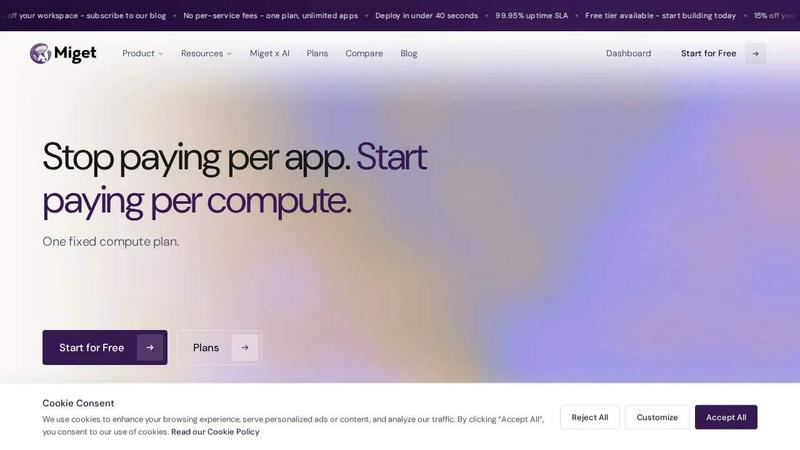
Miget – Stop paying per app. Start paying per compute.
Traditional PaaS platforms charge you for every app, database, and worker separately. Miget flips that model: pick a fixed compute plan, then deploy as many services as you want inside it.
- Unlimited apps, databases, and background workers per plan
- No per-service billing surprises
- Built on Kubernetes with full isolation between tenants
- Deploy from Git, GitHub, Registry with zero-config builds
- Managed PostgreSQL, Redis, and more
- Custom domains with automatic TLS
Whether you're running a single side project or a full production stack, you only pay for the compute you reserve—not the number of things you run on it.