Miget vs PUNKU.AI
Side-by-side comparison to help you choose the right tool.

Miget
Deploy unlimited services on one flat-rate plan.

PUNKU.AI
PUNKU.AI builds powerful AI automations for you in plain English, no coding required.
Last updated: February 28, 2026
Visual Comparison
Miget
PUNKU.AI
Overview
About Miget
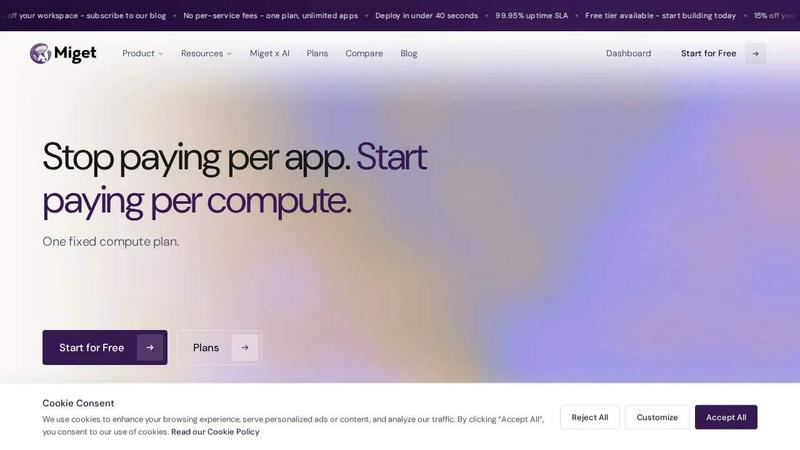
Miget – Stop paying per app. Start paying per compute.
Traditional PaaS platforms charge you for every app, database, and worker separately. Miget flips that model: pick a fixed compute plan, then deploy as many services as you want inside it.
- Unlimited apps, databases, and background workers per plan
- No per-service billing surprises
- Built on Kubernetes with full isolation between tenants
- Deploy from Git, GitHub, Registry with zero-config builds
- Managed PostgreSQL, Redis, and more
- Custom domains with automatic TLS
Whether you're running a single side project or a full production stack, you only pay for the compute you reserve—not the number of things you run on it.
About PUNKU.AI
Let's cut to the chase: the promise of AI automation has been a frustrating mess of complex, code-heavy platforms or opaque "black box" solutions. PUNKU.AI is the breath of fresh air we've been waiting for. This platform is built on a brilliantly simple premise: you describe what you want to automate in plain English, and it builds the AI agent to do it. No coding, no wrestling with cryptic workflow diagrams. It's designed for the doers—the business owners, project managers, marketing teams, and support leaders who are tired of drowning in repetitive digital busywork. The core value proposition is unparalleled clarity and control. Unlike other tools that feel like magic tricks you can't understand, PUNKU.AI lets you visualize your automations in an intuitive node graph, so you actually see and comprehend the process. With seamless connections to over 3,000 apps like Gmail, Slack, and Notion, it slots right into your existing stack. Plus, it doesn't just set and forget; it actively monitors for errors and suggests improvements. For over 200 businesses worldwide, it's become the trusted engine that handles the boring stuff, freeing them to focus on strategy and growth.