OGimagen vs qtrl.ai
Side-by-side comparison to help you choose the right tool.

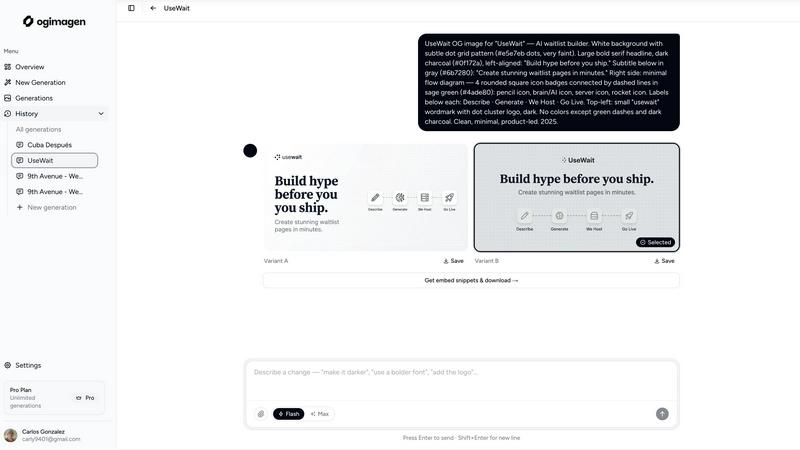
OGImagen instantly creates beautiful, platform-perfect social media images and meta tags from your content.
Last updated: March 11, 2026

qtrl.ai
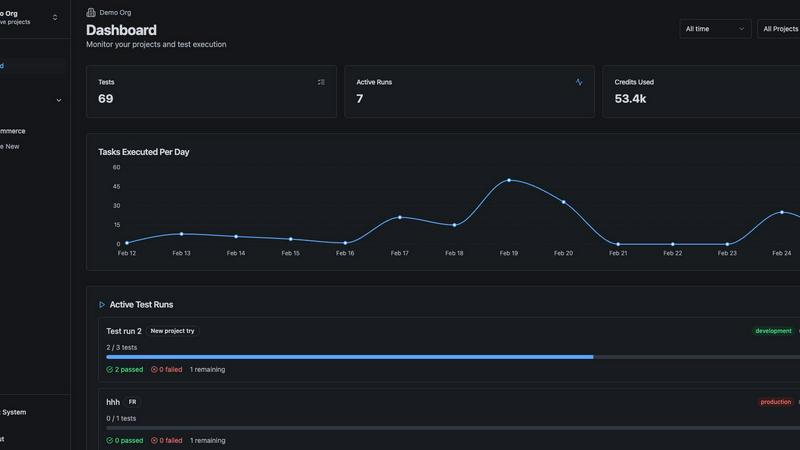
qtrl.ai scales your QA with AI agents while keeping you in full control.
Last updated: March 4, 2026
Visual Comparison
OGimagen
qtrl.ai
Feature Comparison
OGimagen
AI-Powered, Platform-Perfect Generation
OGimagen's core magic is its AI engine that transforms your text into visually engaging social cards. You input your content, and it instantly generates two unique design variants. Crucially, it doesn't just create one image; it automatically outputs three perfectly sized versions (1200x630 for OG, 1200x600 for Twitter, 1200x627 for LinkedIn) from a single generation. This ensures pixel-perfect presentation everywhere your link is shared, from Facebook and Discord to X and LinkedIn, without you ever worrying about aspect ratios or specifications.
Framework-Specific Meta Tag Snippets
This is the killer feature for developers. After generation, OGimagen doesn't leave you hanging with just image files. It provides ready-to-paste code snippets for your specific tech stack. Free users get the standard HTML, but the Pro plan unlocks tailored snippets for all the modern frameworks: Next.js (both App and Pages Router), Astro, SvelteKit, Remix, and more. It handles the entire openGraph and twitter:card metadata object structure, saving you from tedious manual coding and potential errors.
MCP Integration for Editor Workflow
For the ultimate streamlined workflow, OGimagen's Pro plan offers MCP (Model Context Protocol) integration. This is a game-changer. You can connect OGimagen directly to your editor—like Cursor, Windsurf, or Claude Code—and generate images, list past generations, and fetch embed snippets without ever leaving your coding environment. It turns the task of creating social previews from a context-switching hassle into a seamless, in-line command, dramatically boosting productivity.
Global CDN Hosting & Management
Every image you generate is automatically hosted on a fast, global Cloudflare CDN, ensuring quick load times for your previews worldwide. The platform also manages the lifecycle for you. Plans include CDN hosting for specific durations (45 days for Starter, 90 days for Growth, permanent for Pro), removing the burden of image storage and delivery from your own infrastructure. You just generate, copy the snippet, and ship.
qtrl.ai
Enterprise-Grade Test Management
This is the unsung hero of the platform and my personal favorite for teams seeking stability. qtrl provides a centralized, structured command center for all your QA activities. You can organize test cases, plan detailed test runs, trace requirements directly to test coverage, and track everything through live dashboards. It’s built with compliance and auditability in mind, offering full traceability for manual and automated workflows alike. This foundation is what prevents the AI features from becoming chaotic, ensuring you always have clear visibility into what’s been tested and what’s at risk.
Autonomous QA Agents
This is where qtrl truly separates itself from legacy tools. Instead of writing fragile Selenium scripts, you describe what to test in plain English. qtrl’s AI agents then execute those instructions on-demand or continuously across multiple real browser environments. They operate within your defined rules and permissions, performing real browser interactions—not simulations. It’s a game-changer for converting manual test scenarios into reliable, scalable automation without needing an army of automation engineers.
Progressive Automation & Adaptive Memory
This feature embodies qtrl’s core philosophy. You don’t start with a fully autonomous AI; you start with human-written instructions. As the platform's Adaptive Memory builds a living knowledge base of your application from every test run and exploration, it gets smarter. It can then suggest new tests to fill coverage gaps and help generate more tests over time. Every step is reviewable and approvable. This progressive approach builds trust and allows automation to grow organically with your team’s comfort level.
Governance by Design & Multi-Environment Execution
Built for enterprises that can’t afford surprises, qtrl bakes governance into every layer. You have full visibility into agent actions, with no black-box decisions. Permission levels control autonomy, and enterprise-grade security is a given. Coupled with robust multi-environment execution—allowing tests to run across dev, staging, and prod with per-environment variables and encrypted secrets—it ensures you can scale testing safely. The fact that secrets are never exposed to the AI agent is a critical, non-negotiable detail for serious teams.
Use Cases
OGimagen
Bloggers and Content Creators
For anyone publishing articles, tutorials, or newsletters, OGimagen is a lifesaver. Instead of creating a custom graphic for every single post, you can generate a unique, on-brand OG image in seconds. This ensures every link shared to social media looks professional and enticing, directly helping to improve click-through rates from timelines and feeds without investing hours in design work.
SaaS and Product Launch Teams
When launching a new feature, product, or landing page, first impressions are critical. OGimagen allows teams to quickly generate high-quality, consistent social previews that reflect their brand identity. The ability to attach logos and use brand colors ensures every shared link reinforces brand recognition, making marketing shares and community posts look polished and credible.
Developers Building Side Projects
Indie hackers and developers building MVPs need to move fast and look professional. OGimagen eliminates the design bottleneck. With its MCP integration, a developer can stay in their editor, generate a perfect social image for their new project's homepage, and get the exact code for their framework instantly. It's the fastest way to go from code to a shareable, attractive product link.
Marketing and Social Media Managers
Marketing teams managing multiple campaigns or social accounts can use OGimagen to maintain a consistent visual standard across all shared content. The ability to quickly iterate with different title/description combos and get two AI variants allows for A/B testing of what visual style attracts more clicks, all while ensuring technical compliance across every social platform's specifications.
qtrl.ai
Scaling Beyond Manual Testing
For QA teams drowning in repetitive manual regression tests, qtrl is a lifeline. They can start by simply documenting their manual test cases in the platform. Then, they can progressively use the autonomous agents to automate the most tedious flows by describing them in English. This allows the team to scale their coverage and frequency of testing without hiring more manual testers or requiring everyone to learn complex programming frameworks.
Modernizing Legacy QA Workflows
Companies stuck with outdated, siloed testing tools or homegrown frameworks can use qtrl as a unifying platform. It consolidates test management and automation into one system. Teams can import or recreate their existing test assets and begin integrating AI-powered execution incrementally. This provides a clear, low-risk migration path off of brittle automation scripts and towards a more intelligent, maintainable QA process.
Enabling Product-Led Engineering Teams
Engineering teams that own their own quality (a product-led model) need tools that are powerful but not overly complex. qtrl fits perfectly. Developers or product engineers can write high-level test instructions for features they build, and qtrl handles the execution. This embeds quality checks directly into the development workflow without creating a massive maintenance burden for engineers, fostering a true "shift-left" culture.
Ensuring Governance in Regulated Enterprises
For industries like finance or healthcare where audit trails and compliance are mandatory, qtrl’s structured foundation is essential. The platform provides full traceability from requirements to test cases to execution reports. Every action taken by an AI agent is logged and reviewable. This allows enterprises to leverage cutting-edge automation speed while maintaining the strict governance and demonstrable control required by auditors.
Overview
About OGimagen
Let's be honest: creating compelling Open Graph images is a chore that most developers and content creators dread. It's the last step before hitting publish, often done in a rush with a clunky design tool, resulting in a bland, forgettable link preview. OGimagen is the antidote to that entire tedious process. This brilliant tool uses AI to generate stunning, production-ready social card images in seconds. You simply provide a title, description, and a few brand cues, and it delivers not one, but two AI-crafted variants, perfectly optimized for every major platform—OG, Twitter, and LinkedIn. But where it truly shines, in my opinion, is its developer-first mindset. It doesn't just give you pretty pictures; it hands you the exact meta tag snippets for your framework (Next.js, Astro, SvelteKit, you name it) ready to copy-paste into your code. It's built for anyone who wants their shared links to look professional and clickable, from solo bloggers and indie hackers to marketing teams at scaling startups, eliminating the need for any design skill or complex software.
About qtrl.ai
In the chaotic world of software quality assurance, most teams are stuck between a rock and a hard place. On one side, manual testing is a reliable but painfully slow grind that simply doesn't scale. On the other, traditional test automation is a brittle, code-heavy beast that's expensive to build and a nightmare to maintain. Then came the wave of "AI-first" promises, which often felt like handing your quality gates over to a risky black box. This is the exact problem qtrl.ai was built to solve. qtrl is a modern, opinionated QA platform that offers a third path: progressive intelligence. It starts with a rock-solid foundation of enterprise-grade test management—giving you a centralized hub for test cases, plans, runs, and real-time dashboards. This isn't an afterthought; it's the core that ensures governance, traceability, and control. Then, and only when you're ready, it layers on powerful, trustworthy AI automation. Think of it as autonomous QA agents that can generate and maintain UI tests from plain English, executing them at scale across real browsers. It’s perfect for product-led engineering teams, QA groups moving beyond manual testing, and any enterprise that values audit trails as much as it values speed. qtrl’s mission isn't to replace you with AI; it's to augment your team with a tool that earns its autonomy, bridging the gap between control and velocity in a way that finally feels sustainable.
Frequently Asked Questions
OGimagen FAQ
What is the difference between the Starter, Growth, and Pro plans?
The Starter plan is a one-time purchase for 10 generations, perfect for a small project. Growth, also one-time, offers 25 generations and longer CDN hosting. The Pro plan is a monthly subscription that is the full, powerful experience: 50 generations per month, permanent CDN hosting, access to all framework snippets (not just HTML), and the invaluable MCP integration for your code editor. For serious builders, Pro is the obvious choice.
What happens when my CDN hosting expires?
When your hosting period ends (e.g., after 45 days on the Starter plan), the images are removed from the CDN. This means the links in your meta tags will break, and social platforms will no longer display your custom preview. You can prevent this by upgrading to a plan with longer hosting (Growth) or permanent hosting (Pro), or by downloading and self-hosting the image files before they expire.
What is MCP integration and why is it useful?
MCP (Model Context Protocol) lets different tools talk to your AI-assisted code editor. OGimagen's MCP integration means you can control it directly from editors like Cursor or Windsurf. You can generate a new image via a command, list your past generations, and insert the correct meta tag snippet—all without opening a browser. It's a massive productivity boost, keeping you in a state of flow.
Which frameworks are supported for meta tag snippets?
Free users receive a standard HTML meta tag snippet. Pro users unlock comprehensive support for all major modern frameworks. This includes Next.js (for both the App Router and the older Pages Router), Astro, SvelteKit, and Remix. The tool provides the exact, correct syntax for each, so you never have to adapt the code manually.
qtrl.ai FAQ
How does qtrl.ai's AI differ from other "AI testing" tools?
The key difference is qtrl’s progressive, trust-first approach. Many tools force you into a fully autonomous, black-box AI model from day one, which can be risky and opaque. qtrl starts with a solid test management foundation and introduces AI as an assistive layer. Its agents operate on your instructions, their actions are fully visible, and you maintain approval power at every stage. It’s AI designed to augment and prove its value, not to take over unpredictably.
Can I use qtrl.ai if my team has no coding experience?
Absolutely, and this is one of its strongest suits. The primary interface for creating automated checks is plain English instructions. You describe the user journey (e.g., "Log in, navigate to the dashboard, and verify the welcome message appears"), and qtrl’s agent figures out how to execute it in a real browser. This dramatically lowers the barrier to entry for creating robust UI automation compared to traditional coding-based frameworks.
How does qtrl handle tests when my application UI changes?
This is where the Adaptive Memory and maintenance capabilities shine. The platform builds a contextual understanding of your application. When a UI change breaks a test, qtrl can often suggest a fix or update the test instructions based on the new layout. It significantly reduces the notorious "test maintenance tax" associated with traditional automation, as the AI helps keep your test suite aligned with the evolving application.
Is qtrl.ai suitable for a small startup or only for large enterprises?
It’s designed to scale with you, making it suitable for both. A small startup can begin using the robust test management features for free (on the Start plan) to organize their QA process. As they grow and feel the pain of manual testing, they can seamlessly activate the AI agents to automate without switching platforms. The enterprise-grade security and governance features are there when you need them, not forced on you from day one.
Alternatives
OGimagen Alternatives
OGimagen is a specialized AI-powered dev tool designed to generate beautiful Open Graph images. It automates the creation of production-ready social cards, helping developers and content creators ensure their shared links look professional and engaging across all social platforms. People often seek alternatives for a variety of practical reasons. Cost is a major factor, as budget constraints can push users to look for free or more affordable tiers. Others might need specific integrations with their existing tech stack, more granular design control, or a different set of AI capabilities that better match their workflow. When evaluating other options, focus on a few key areas. Consider the quality and consistency of the AI-generated visuals, the flexibility of the templates or customization tools, and how seamlessly the tool integrates into your publishing pipeline. The goal is to find a solution that saves you time without compromising on the visual impact of your social previews.
qtrl.ai Alternatives
qtrl.ai is a modern QA platform that sits at the intersection of test management and AI-powered test automation. It’s designed for teams who want to scale their testing efforts intelligently, moving beyond purely manual processes without jumping straight into the deep end of complex, fragile automation scripts. People explore alternatives for a variety of reasons. Budget is always a factor, as some teams need a free tier or a different pricing model. Others might be looking for a tool that’s purely focused on either test management or automation, rather than a combined platform like qtrl. Integration needs, specific feature requirements, or a preference for a different user experience can also drive the search. When evaluating other options, focus on your team's core need. Are you primarily seeking a robust test case repository, or is your goal to automate UI tests as quickly as possible? Consider how much control and visibility you require over the AI components, and don't underestimate the importance of governance features like audit trails if you're in a regulated industry. The right fit balances capability with your team's comfort level and workflow.