CloudBurn vs Local Tools
Side-by-side comparison to help you choose the right tool.

CloudBurn
CloudBurn shows AWS cost estimates in pull requests to prevent budget surprises.
Last updated: March 1, 2026

Local Tools
Local Tools is your curated directory for thousands of powerful, private tools that run instantly in your browser with no installs or uploads.
Last updated: April 4, 2026
Visual Comparison
CloudBurn
Local Tools
Feature Comparison
CloudBurn
Automated Pull Request Cost Reports
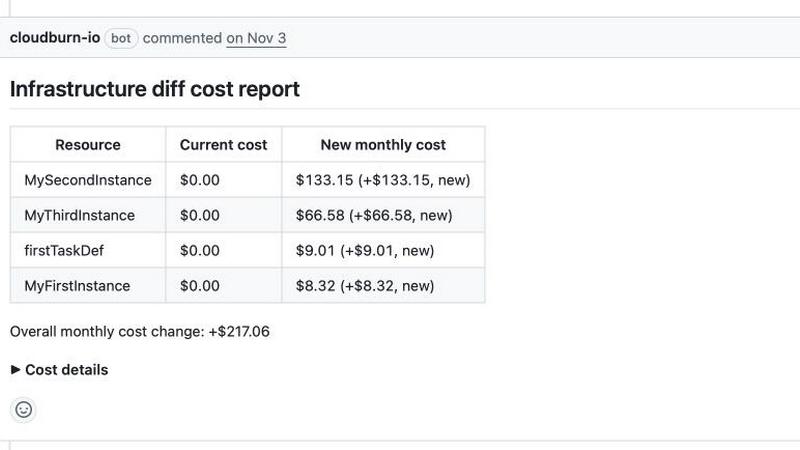
This is the killer feature. CloudBurn automatically posts a detailed, line-item cost breakdown as a comment on every relevant pull request. It shows the current cost, the new projected monthly cost, and the delta for each resource being changed or added. This happens seamlessly within seconds, requiring zero manual intervention from developers and making cost visibility an integral, non-negotiable part of the code review ritual, just like checking for linting errors.
Real-Time AWS Pricing Integration
Forget outdated spreadsheets or static price lists. CloudBurn pulls directly from the latest AWS pricing data to ensure every estimate is accurate and reflects the current on-demand rates for services and instance types in your specific region. This means the cost feedback you get is reliable and actionable, whether you're provisioning a t3.micro or a memory-optimized RDS instance.
Seamless IaC Tool Integration
CloudBurn works natively with the infrastructure-as-code tools teams actually use. It integrates with GitHub Actions for both AWS CDK (via the CDK Diff PR Commenter) and Terraform (via the Terraform Plan PR Commenter). This design-first approach means setup is incredibly simple—you're not rebuilding your pipeline; you're enhancing it with a critical new layer of intelligence.
Proactive Cost Anomaly Prevention
The tool is fundamentally designed to catch mistakes early. By analyzing the infrastructure diff, it can flag unexpectedly expensive resource configurations—like accidentally choosing an xlarge instance when a large would suffice—before they are deployed. This shifts FinOps left, preventing the need for risky and time-consuming refactoring projects in production after a budget alarm goes off.
Local Tools
Curated, Cross-Source Aggregation
Local Tools doesn't create its own utilities; it performs the vital service of discovery and comparison. It aggregates tools from multiple established "on-device" platforms, allowing you to see all your options side-by-side. This means you can find a specific PDF editor available on Site A but not Site B, or compare the output quality between two different image converters. It turns a collection of separate websites into a unified, competitive marketplace for the best browser-based tool for any given task.
Strictly Browser-First & Private Operation
This is the foundational ethos. Every tool listed is vetted to ensure it operates client-side in your browser. Your files are processed locally on your machine using JavaScript and WebAssembly—they are never uploaded to a remote server for processing. This architecture guarantees superior privacy, eliminates concerns about data retention policies, and often results in faster performance since there's no network latency for the core computation.
Functional, Intuitive Organization
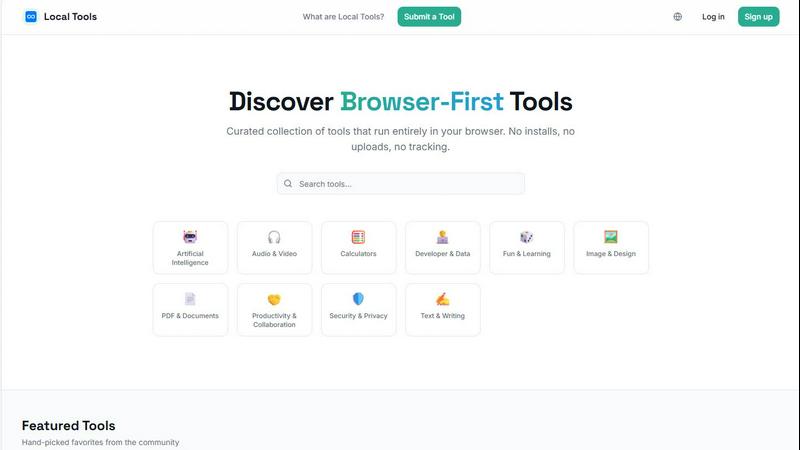
Navigating thousands of tools could be chaos, but Local Tools employs a smart, category-driven structure. You won't just find a monolithic list. Tools are organized into intuitive categories like Image & Design, Developer & Data, PDF & Documents, and Security & Privacy. This functional grouping lets you drill down to exactly what you need, whether it's a text diff checker, a color palette generator, or an audio trimmer, without wading through irrelevant options.
Community-Driven Curation & Discovery
The directory is built to evolve with the web. It features a "Submit a Tool" function, allowing the community of privacy-conscious users and developers to contribute new finds. This, combined with user ratings and featured tool sections, creates a living resource. You're not just using a static list; you're tapping into a collective effort to surface the most powerful, efficient, and well-loved tools that respect user privacy.
Use Cases
CloudBurn
Preventing Accidental Cost Spikes in PR Reviews
The classic horror story: a developer updates a Terraform module, changing a t3.small to a t3.xlarge without realizing the 4x cost impact. CloudBurn stops this by making the $133/month price tag for that instance glaringly obvious in the PR comment. This sparks an immediate conversation between the developer and reviewer, allowing for a cost-optimized alternative to be chosen before merge.
Enabling Developer-Led Cost Optimization
Instead of finance or platform teams dictating cost rules retroactively, CloudBurn gives developers the data they need to self-optimize. When designing a new feature, engineers can experiment with different resource types and immediately see the cost trade-offs, fostering innovation within budgetary guardrails and building a shared sense of ownership over cloud spend.
Streamlining Infrastructure Approval Workflows
For teams with mandatory cost reviews, CloudBurn automates the most tedious part. Managers and tech leads no longer need to manually calculate estimates or guess the impact. The clear, automated report provides the audit trail and data needed for informed approval, significantly speeding up the deployment cycle while adding a robust financial governance layer.
Onboarding and Educating New Team Members
For engineers new to AWS or a codebase, CloudBurn acts as a real-time learning tool. It provides immediate feedback on the cost implications of their code, helping them understand the financial weight of their infrastructure decisions from day one and accelerating their journey to becoming cost-aware cloud practitioners.
Local Tools
The Privacy-Consensitive Professional
A freelance graphic designer receives a client's logo draft on a public library computer. Using Local Tools, they find Photopea—a full-featured, Photoshop-like editor that runs in the browser. They can make crucial edits and adjustments without installing software or risking the client's intellectual property by uploading it to an unknown server. The work is done securely, locally, and with professional-grade results.
The Developer Seeking the Right Utility
A software engineer is debugging a complex API response. Instead of struggling with a dense JSON blob, they search Local Tools and find JSON Crack. They instantly visualize the data structure as an interactive graph, right in their tab, making it trivial to spot anomalies. Later, they might use a separate tool from the directory to minify their CSS, all without leaving the browser or compromising proprietary code.
The Student or Researcher Processing Data
A student working on a thesis needs to analyze survey data stored in a CSV file. They use Local Tools to find a browser-based chart generator and a statistical calculator. They can clean, visualize, and calculate metrics from their dataset entirely on their laptop, even without an internet connection after the tools are loaded. This ensures their research data remains completely confidential and accessible.
The Everyday User Solving Quick Problems
Someone needs to compress a batch of vacation photos to email to family, combine several PDFs into one document, and calculate a tip at a restaurant. Instead of searching separately and risking sketchy download links, they visit Local Tools. They quickly find Squoosh for image optimization, a PDF merger, and a calculator—solving all three tasks in minutes with tools that are fast, safe, and require no sign-ups.
Overview
About CloudBurn
CloudBurn is the essential early-warning system for any engineering team building on AWS. In my opinion, it solves one of the most pervasive and painful problems in modern cloud development: the terrifying, post-deployment bill shock. If your team uses Terraform or AWS CDK, you absolutely need this tool. CloudBurn integrates directly into your GitHub pull request workflow to provide real-time, automated cost analysis before any infrastructure code is merged. It transforms cloud cost management from a reactive, finance-led headache into a proactive, developer-friendly process. By surfacing the exact dollar impact of every VPC, EC2 instance, or Fargate task definition change right in the code review, it empowers engineers to make cost-conscious architectural decisions. This isn't just about saving money—it's about fostering a culture of ownership and financial accountability within development teams, preventing costly misconfigurations from ever reaching production and turning a monthly surprise into a predictable, optimized expense.
About Local Tools
Local Tools is a game-changing answer to a modern digital headache: the scattered, overwhelming world of online utilities. Forget juggling a dozen bookmarked sites that all promise similar tools. Local Tools is a meticulously curated, searchable directory that aggregates thousands of browser-first tools from across the web, all in one intelligent hub. The core, non-negotiable principle? Every single tool runs entirely on your device. This means zero installations, no uploading your sensitive files to mysterious servers, and absolutely no tracking. Your data stays with you, making every action fast, private, and refreshingly simple.
What truly sets it apart is its curatorial approach. Instead of just dumping hundreds of near-identical tools on you, Local Tools organizes by genuine functionality. Want to compare three different in-browser image compressors or find a niche JSON visualizer that one popular site doesn't offer? This is your destination. It's designed for the pragmatist: the developer who needs a quick code formatter, the designer editing a mockup on a public computer, the student processing data for a project, or anyone who just wants to calculate something without the privacy anxiety. Local Tools cuts through the noise, transforming a fragmented ecosystem into a single, powerful, and private resource for getting things done.
Frequently Asked Questions
CloudBurn FAQ
How does CloudBurn calculate the cost estimates?
CloudBurn analyzes the output of your cdk diff or terraform plan command, which details the proposed infrastructure changes. It then cross-references the resources and their configurations (instance type, region, storage size, etc.) with the live AWS Price List API. Using standard assumptions for monthly runtime (730 hours), it calculates a projected monthly on-demand cost for both the new state and the current state, presenting the difference.
Is my code or cloud credentials exposed to CloudBurn?
No, and this is a critical design point for security. Your actual Terraform or CDK code never leaves your GitHub repository. CloudBurn's system only receives the diff output (the plan text) from the GitHub Action you install. Furthermore, CloudBurn does not require or have access to your AWS credentials; cost calculation is done using publicly available pricing data, not by accessing your account.
What happens if we use Reserved Instances or Savings Plans?
Currently, CloudBurn provides estimates based on standard AWS on-demand pricing. This is intentional, as it gives you the "sticker price" or maximum potential cost of a resource, which is the most critical figure for preventing budget overruns. It creates a consistent, conservative baseline for comparison. Understanding the impact before applying discounts is still immensely valuable for planning and avoiding waste.
Can we use CloudBurn with private GitHub repositories?
Absolutely. CloudBurn is installed via the GitHub Marketplace, and you can grant it permission to access specific private repositories where you manage your infrastructure-as-code. The integration operates securely within GitHub's ecosystem, and the billing and permissions are handled entirely through your GitHub account.
Local Tools FAQ
Is Local Tools really free to use?
Yes, the Local Tools directory website itself is free to access and use. The individual tools listed within the directory are also typically free, as they are primarily browser-based utilities provided by their respective developers. There is no subscription or fee for browsing, searching, and accessing the links to these external tools through the Local Tools platform.
How do you ensure the tools are truly private and run locally?
The curation team prioritizes and verifies tools that are known to operate on client-side technology. This is often evident in the tool's own description (stating "no uploads" or "runs in your browser") and can be technically observed. Tools that require file uploads to a server for processing are excluded. The focus is on tools leveraging modern web capabilities like HTML5, JavaScript, and WebAssembly to perform computations directly on the user's device.
Can I request or submit a tool to be added?
Absolutely! Local Tools has a "Submit a Tool" feature because the web is vast. If you've found an excellent browser-based, privacy-respecting utility that isn't yet in the directory, you are encouraged to submit it for review. This community-driven approach is key to keeping the resource comprehensive and up-to-date with the best available tools.
What if a linked tool stops working or changes its policy?
Local Tools is an aggregator and directory, not the host of these external tools. While efforts are made to maintain link integrity and monitor for significant changes, the operation and policies of each individual tool are managed by their original creators. Users are always advised to check the specific tool's website for its latest terms of service and privacy policy before use.
Alternatives
CloudBurn Alternatives
CloudBurn is a specialized tool in the developer operations category, designed to bring AWS cost visibility directly into the pull request process. It's for teams using Terraform or AWS CDK who want to catch expensive infrastructure mistakes before they deploy, turning cost management from a reactive accounting task into a proactive part of the engineering workflow. Teams might seek alternatives for various reasons. Perhaps they need a solution that works with a cloud provider other than AWS, or they require a different pricing model that better fits their budget. Others might be looking for a tool with a broader feature set that includes security scanning or compliance checks alongside cost analysis. When evaluating other options, focus on core needs. The best alternative will seamlessly integrate with your existing version control and infrastructure-as-code tools. Look for accurate, real-time pricing data and actionable, resource-level insights that developers can actually use during code review. The goal is to find a solution that embeds financial accountability into your team's culture without slowing them down.
Local Tools Alternatives
Local Tools is a curated directory that falls into the category of on-device, browser-first utility platforms. It aggregates thousands of tools that run entirely in your browser, eliminating the need for installs or risky file uploads. The goal is to organize a fragmented ecosystem into a single, searchable hub for privacy-focused tasks. People explore alternatives for a few key reasons. They might be looking for a platform with a different organizational structure or a more specialized focus on a particular niche, like advanced developer utilities or creative design tools. Others might prioritize a different user experience or discoverability method beyond a curated directory. When evaluating other options, your north star should be the core principle of local execution. Ensure the tools genuinely run in your browser without hidden uploads. Look for a clean, intuitive interface that matches your workflow, and consider the depth and quality of curation in your most-used categories, whether that's data conversion, image editing, or text processing.