
HiAPI
HiAPI is my favorite unified gateway for generating and persistently storing AI images, video, and audio through a single, production-ready API.
Visit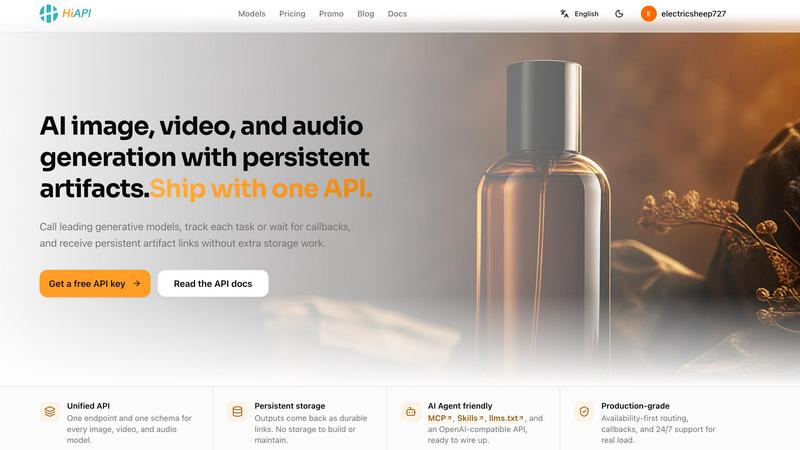
About HiAPI
HiAPI is the developer-first AI API platform that I believe is quietly redefining how teams integrate generative AI into their products. Instead of juggling multiple API keys, billing accounts, and inconsistent schemas for every image, video, and audio model on the market, HiAPI gives you one unified gateway. You get access to leading models like OpenAI's GPT Image 2, ByteDance's Seedream 5.0 Pro, Black Forest Labs' FLUX 1.1 Pro, MiniMax Music 2.6, and Seedance 2.0 for video, all through a single API key with OpenAI-compatible request formats. What truly sets HiAPI apart for me is its obsession with persistent storage and asynchronous task management. Every output comes back as a durable artifact link, meaning you never have to build or maintain your own storage infrastructure. The platform is built for production-grade workloads with availability-first routing, automatic callbacks, and 24/7 support. Whether you are a solo developer prototyping an AI agent, a startup building a content generation pipeline, or an enterprise deploying at scale, HiAPI removes the friction of multi-model integration. It is opinionated about developer experience, offering MCP tools, reusable Skills, and an llms.txt prompt that lets AI agents discover and wire up to the platform autonomously. This is not just another API aggregator; it is a thoughtfully designed platform that prioritizes reliability, simplicity, and cost transparency.
Features of HiAPI
One Unified API for Image, Video, and Audio
HiAPI consolidates every generative model behind a single endpoint and schema. You pass the base model name, provide model-specific input parameters, and optionally set route, storage, and callback preferences. This means you can switch from generating a high-fidelity image with FLUX 1.1 Pro to composing a song with MiniMax Music 2.6 without rewriting your integration code. The consistency is a massive time saver for any team managing multiple media types.
Persistent Artifact Storage Without Extra Work
Every output from HiAPI comes back as a durable, low-cost persistent link. You do not need to build, maintain, or pay for separate storage buckets. This feature alone eliminates a huge operational headache. Whether you are generating thousands of images per day or a few audio clips, the artifacts remain accessible indefinitely through the provided URLs, making it trivial to serve content to end users or feed into downstream workflows.
AI Agent Friendly Integration
HiAPI is designed from the ground up to be consumed by both human developers and autonomous AI agents. It supports MCP (Model Context Protocol) tools, reusable Skills with predefined instructions, and an llms.txt file that agents can read to understand the entire API surface. You can paste the llms.txt prompt into Claude, Cursor, Codex, or any other agent and have it autonomously decide whether to use Skills, Remote MCP, or the direct API. This is the future of integration, and HiAPI is already there.
Production-Grade Reliability and Callbacks
The platform is built for real load with availability-first routing and automatic callbacks. You submit a task via a simple POST request, and HiAPI handles the rest. You can optionally provide a callback URL to be notified when processing completes, eliminating the need for constant polling. Combined with idempotency keys that prevent duplicate task creation, this makes HiAPI suitable for mission-critical pipelines where every job must be tracked and accounted for.
Use Cases of HiAPI
Building AI-Powered Content Generation Platforms
If you are creating a platform that lets users generate marketing images, product videos, or background music, HiAPI is your ideal backend. You write one integration that calls any model through the same endpoint. When a user requests an image, you submit a task to Seedream 5.0 Pro or GPT Image 2. When they want a video, you switch to Seedance 2.0. The persistent artifact links mean you can immediately serve the generated content to your users without any intermediate storage logic. This dramatically accelerates time to market for content creation startups.
Empowering Autonomous AI Agents with Multimedia Skills
Developers building AI agents that need to generate and share media can wire HiAPI in minutes. An agent reading the llms.txt file can autonomously discover the task API, select the appropriate model, and submit generation jobs. For example, an agent tasked with creating a social media post can generate an image using Nano Banana 2, compose a soundtrack with MiniMax Music 2.6, and retrieve persistent links for both, all through the same unified workflow. This makes HiAPI a natural fit for agentic applications in marketing, education, and entertainment.
Streamlining Enterprise Creative Workflows
Marketing teams and creative agencies often need to produce large volumes of visual and audio assets. HiAPI allows you to build automated pipelines that submit hundreds of image generation tasks in parallel, each with different prompts and parameters. The callback feature ensures you are notified as each artifact completes, and the transparent pricing lets you estimate costs before a production launch. You can route tasks through different models based on quality requirements, using FLUX 1.1 Pro for high-fidelity hero images and Seedream 5.0 Pro for batch social media graphics.
Prototyping and Experimenting with New AI Models
For researchers and product developers who want to compare model outputs without managing multiple API subscriptions, HiAPI is a playground. You can quickly swap models in your code by changing a single string parameter. Want to see how GPT Image 2 handles text rendering versus Seedream 5.0 Pro? Just change the model name. This flexibility makes HiAPI invaluable for rapid prototyping, A/B testing generative outputs, and staying ahead of the rapidly evolving AI model landscape.
Frequently Asked Questions
What models are available on HiAPI?
HiAPI currently supports a curated selection of leading generative models. For image generation, you have access to GPT Image 2 from OpenAI, Seedream 5.0 Pro and Nano Banana 2 (Google Gemini Flash) from ByteDance, and FLUX 1.1 Pro from Black Forest Labs. For video, Seedance 2.0 from ByteDance is available with cinematic quality and multi-shot consistency. For audio, MiniMax Music 2.6 allows you to generate complete songs from prompts and lyrics. The platform is continuously adding new models, so check the models page for the latest additions.
How does the persistent storage feature work?
When you set the storage parameter to "persistent" in your task request, HiAPI stores the generated artifact and returns a durable URL. This URL remains accessible indefinitely, and you do not need to manage any storage infrastructure yourself. This is particularly valuable for production applications where you need to serve generated images, videos, or audio files to end users without building a separate content delivery system. The storage is low-cost and included in the pay-as-you-go pricing.
Can I use HiAPI with AI agents like Claude or Cursor?
Absolutely. HiAPI is designed to be AI agent friendly. You can provide agents with the llms.txt file, which contains a complete documentation index. Agents can then autonomously decide whether to use the Remote MCP tools, predefined Skills, or the direct API to integrate HiAPI. This allows agents to generate images, videos, and audio as part of their workflows without manual configuration. It is a powerful capability for building autonomous content generation systems.
What is the pricing model for HiAPI?
HiAPI operates on a transparent pay-as-you-go pricing model. Every model lists its price per request or per unit of output upfront on the platform. There are no hidden fees or complex tier structures. You can review the cost of each model before integrating, allowing you to estimate expenses accurately for your use case. New users receive up to $1 in free credits upon signing up, which is perfect for testing and prototyping. The platform also offers unified billing, so all model usage appears on a single invoice.
Pricing of HiAPI
HiAPI uses a transparent pay-as-you-go pricing model. Every model on the platform lists its specific price per request or per output unit directly on the model details page. This allows you to review costs before integration and estimate expenses accurately for production launches. There are no hidden fees or complex tier structures. New users receive up to $1 in free credits upon signing up, which is sufficient for extensive testing and prototyping. All model usage is consolidated under unified billing, so you receive a single invoice regardless of how many different models you call. For detailed pricing on specific models like Seedream 5.0 Pro or MiniMax Music 2.6, visit the respective model pages on the HiAPI platform.
Similar to HiAPI

AI Album Cover Maker
Create release-ready album covers from a prompt or photo. Generate, refine, and export art for singles, EPs, mixtapes, and playlists.
Sprite Sheet Maker
A free browser-based toolkit for creating, cutting, converting, and previewing sprite sheet animations.

PixRestorer
Restore and colorize old photos with AI in seconds. PixRestorer repairs scratches, fading, blur, and tears, brings black-and-white prints to life in n
Artaivo
One AI workspace for video, images, avatars, and audio.
Vismuse
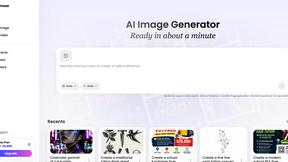
Create polished AI images and videos from prompts or references for social posts, ads, flyers, album covers, and campaigns.

Nano AI Prompts
NanoAIPrompts is a free AI image prompt library built for creators, photographers, designers, and AI enthusiasts. It offers ready-to-use prompts.

Magic Eraser
AI photo editor for removing objects and backgrounds, enhancing images, and creating visuals on web and mobile.