
Rock Smith
Rock Smith automates QA testing with AI agents, ensuring reliable results without the hassle of maintenance.
Visit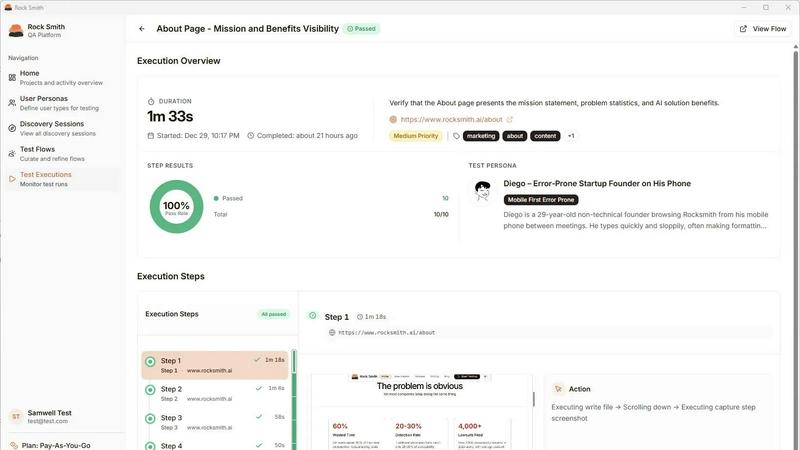
About Rock Smith
Rock Smith is an innovative AI-powered testing solution that transforms web application quality assurance (QA) processes. By utilizing autonomous AI agents that simulate real user interactions, Rock Smith moves away from traditional testing methods that often depend on fragile CSS selectors or XPath expressions. Instead, it adopts a unique approach of semantic element targeting, enabling users to describe UI elements based on their visual traits and context. This adaptability ensures that tests remain robust and self-healing, effortlessly adjusting to any changes in the user interface. Designed for fast-paced engineering teams, Rock Smith empowers organizations to automate black box QA testing without the burdens of constant maintenance. Its primary value proposition is to enhance testing efficiency and accuracy, allowing teams to dedicate their time to development and innovation rather than troubleshooting and debugging. Whether you are a solo founder or part of a sprawling engineering team, Rock Smith is tailored to meet your QA needs with precision and ease.
Features of Rock Smith
Autonomous AI Testing Agents
Rock Smith employs autonomous AI testing agents that replicate real user behavior, making it possible to conduct thorough and realistic testing scenarios without manual intervention. This feature drastically reduces the time needed for QA processes while increasing accuracy and reliability.
Semantic Element Targeting
Unlike traditional testing tools that rely on brittle selectors, Rock Smith's semantic element targeting allows users to describe UI elements based on visual characteristics. This approach ensures that tests remain functional and resilient even when the interface undergoes changes, saving time and effort in maintenance.
Self-Healing Tests
Rock Smith's self-healing capabilities automatically adjust tests in response to UI changes. This feature minimizes the need for manual updates, allowing teams to focus on delivering new features and enhancing user experience without worrying about breaking existing tests.
Comprehensive Implementation Plans
Rock Smith provides detailed implementation plans that guide teams through the entire process of integrating testing into their workflows. These plans include user flows, edge cases, and system design considerations, ensuring that the testing process is well-structured and effective.
Use Cases of Rock Smith
Accelerating QA for Startups
Startups can leverage Rock Smith to streamline their QA processes, allowing them to release products faster without compromising on quality. The ability to automate testing means that these teams can focus on innovation rather than getting bogged down by manual testing procedures.
Enhancing Testing for Agile Teams
Agile teams benefit from Rock Smith's robust testing capabilities, as it allows them to implement continuous testing practices. This ensures that every iteration of the product is thoroughly tested, leading to higher quality releases and reduced feedback loops.
Minimizing Maintenance Overhead
Organizations that struggle with maintaining traditional testing frameworks can find solace in Rock Smith's self-healing tests. This feature reduces the maintenance burden, freeing up resources to focus on developing new features and enhancements.
Improving User Experience
By utilizing Rock Smith to conduct thorough testing, teams can identify and rectify user experience issues before they reach production. This proactive approach enhances overall product quality and leads to higher user satisfaction and retention.
Frequently Asked Questions
How does Rock Smith improve testing efficiency?
Rock Smith improves testing efficiency by using AI agents that simulate real user interactions, significantly reducing the time spent on manual testing and allowing for quicker release cycles.
Can Rock Smith adapt to changes in the UI?
Yes, Rock Smith features self-healing tests that automatically adjust to changes in the user interface, ensuring that your testing remains relevant and functional without the need for constant manual updates.
Is Rock Smith suitable for large teams?
Absolutely! Rock Smith is designed to cater to both small startups and large engineering teams, providing scalable solutions that enhance collaboration and streamline QA processes.
What is the primary benefit of semantic element targeting?
The primary benefit of semantic element targeting is that it allows for more robust and reliable tests. By focusing on the visual characteristics of UI elements rather than fragile selectors, teams can ensure that their tests remain effective even as the interface evolves.