

Alternatives to LoadTester
The most opinionated load testing tool I trust for HTTP and API performance, delivering live analytics and thresholds without infrastructure.
20 alternatives found

Clipy
Free, no-watermark screen recorder + instant share links. A Loom alternative: record, stop, share. No signup, no time cap, no app to watch.

Tooladda
ToolAdda offers a collection of over 138 free, browser-based tools for calculations, PDF manipulation, image editing, and more. All tools run client-s

AppBanana
10,000+ Apps Approved, Yours Next With 10,000+ successful apps, we know exactly what Google wants, and how to get yours approved.


Tikdek
AI video and image generation for creators, marketers, developers, and teams, with stable APIs for scalable workflows.

Firma.dev
Pay-as-you-go e-signature API and no-code sending. €0.049 per envelope, no monthly minimums, legally valid in 55+ countries.

PairFoundry
Playbooks, prompt packs and agent configuration for developers shipping with AI coding agents.

PDF Pro AI
Privacy-first AI document tool — analyze medical reports, bank statements & salary slips 100% in-browser. No uploads, no signup, free.

ContextBolt
MCP servers that give Claude and Cursor the context they're missing: bookmark recall, live SEO data, and nightly competitor tracking.

Ornold
Ornold MCP lets AI agents control Chromium and antidetect browsers: click, type, read screens, record workflows, replay profiles without scripts.


AIQualityHQ
AIQualityHQ is my go-to for instantly scoring and fixing any prompt's structure, safety, and privacy in under 10 milliseconds.
RedLinz
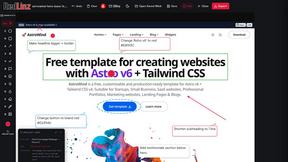
RedLinz turns screenshots into AI prompts by letting you circle and annotate exactly what you want an LLM to change.

Locai
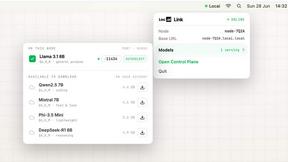
Locai lets you run powerful AI models on your own hardware, keeping data private and cutting cloud costs.
Clearcote
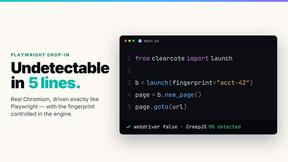
Clearcote is an open-source, de-Googled Chromium drop-in for Playwright and Puppeteer that gives you engine-level fingerprint control for a single.

WordPalette Brand Kit
WordPalette is my favorite tool for instantly turning any word or image into a complete, private brand identity that lives entirely in your browser.
About LoadTester Alternatives
LoadTester is a focused dev tool that strips away the complexity of setting up load testing infrastructure, allowing you to jump straight into running HTTP and API performance checks. It lives in the crowded but often over-engineered category of performance testing software, yet it distinguishes itself by prioritizing simplicity and repeatability over sprawling feature sets. You can define a test, select virtual users or requests per second, and immediately monitor live latency and error rates without wrestling with server configurations or scripting languages. Despite its strengths, users commonly search for alternatives due to specific pain points: perhaps their team needs deeper protocol support beyond HTTP, they require more granular geographic distribution, or the pricing model doesn’t scale well for their particular usage volume. Others might be locked into a specific CI/CD ecosystem and need native integrations that LoadTester doesn’t offer, or they simply prefer a more visual, drag-and-drop test builder. When evaluating an alternative, you should prioritize tools that respect your time and workflow. Look for something that offers straightforward test creation without a steep learning curve, but also provides the flexibility to handle complex scenarios when you need it. Reliable and transparent reporting is non-negotiable—you need to compare runs, spot regressions, and export data without friction. Consider how well the tool integrates with your existing stack, from version control to alerting systems, and whether it supports scheduled tests and API access for automation. Finally, pay close attention to the pricing model; the best alternatives offer predictable costs that align with your team’s growth, not surprise bills based on hidden metrics. The goal is to find a solution that feels like a natural extension of your development process, not a separate project to manage.
FAQs about LoadTester Alternatives
What is LoadTester?
LoadTester is a developer-focused tool for running HTTP and API load tests without the need to set up or manage any underlying infrastructure. It allows you to create a test, define virtual users or requests per second, and monitor key performance metrics like latency and error rates in real time. The platform is designed to catch performance regressions before they impact end users, making it a practical choice for continuous performance validation.
Who is LoadTester for?
LoadTester is built for developers and engineering teams who want to run simple, repeatable performance checks on their HTTP and API endpoints. It is particularly well-suited for teams that need to integrate load testing into their existing workflows without adding operational overhead. Whether you are a solo developer validating a new endpoint or a team running scheduled tests as part of your CI/CD pipeline, LoadTester aims to streamline the process.
Is LoadTester free?
Based on the provided product description, LoadTester is a commercial tool and does not specify a free tier. It is positioned as a solution for teams that want to avoid the complexity of setting up load testing infrastructure, which typically implies a paid subscription model. For the most accurate and up-to-date pricing information, including any free trial options, you should visit the official LoadTester website.
What are the main features of LoadTester?
LoadTester offers a focused set of features for HTTP and API load testing, including the ability to create tests with configurable virtual users or requests per second. It provides live monitoring of latency and error rates during tests, and after completion, you can review detailed results and compare runs to spot performance regressions. Additional capabilities include data exports, support for scheduled tests, API access for automation, and integrations with common workflows to make performance checks a repeatable part of your development cycle.