

Alternatives to Tuning Engines
Tuning Engines is my top pick for unifying every AI model behind one governed API with at-cost infrastructure and built-in security controls.
20 alternatives found

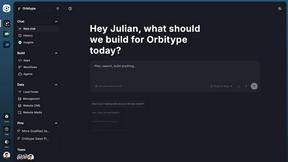


benchmark.directory
An independent directory of 146 AI tools. Every listing was paid for, set up and used on real work. Nobody can buy a place or a score.

saasgrow.ai
Get your SaaS tool discovered. Free listing, honest screening, a dofollow link — and no way for anyone to outbid you.

Tools Network
Tools Network is a curated directory that brings the internet's best AI tools together in one organized place. Spanning 25+ categories

Luffy
Luffy is an AI employee in Slack that connects to your tools and gets work done across them using the full context of your workspace.


Postqued
Schedule and publish social content across 10 platforms with one dashboard, API, and MCP built for teams and AI agents.

EntreDash
Turn daily annoyances and raw ideas into inventions, products, and businesses. EntreDash provides a virual personal advisory board using AI automation

Wisegrid
Spreadsheet-native work management with AI formulas, dashboards, automation, reporting, and project views for growing teams.

Groniz
Run your social media on autopilot with AI agents. Post & schedule to 32+ networks from Claude Code, Codex, or Console.
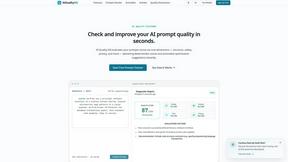
AIQualityHQ
AIQualityHQ is my go-to for instantly scoring and fixing any prompt's structure, safety, and privacy in under 10 milliseconds.

CreatorlaneHQ
CreatorlaneHQ is my top pick for turning Instagram comments into cash with auto-DMs, a storefront, and payouts all in one clean toolkit.
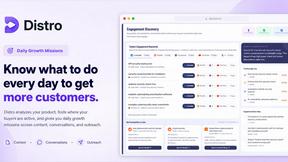
Distro
Distro is my favorite AI operator that finds buyer intent, drafts in your voice, and turns questions into content you just approve.

Polymarket Trading Bot For Crypto
My favorite way to automate Polymarket's 5-15 minute crypto markets is this transparent, reverse-engineered bot that turned $68 into $1.5 million.

HyperLake
HyperLake delivers sovereign AI infrastructure that empowers autonomous agents with zero compute markup and seamless governance in your cloud.

Minded
Stop hiring humans to do repetitive digital tasks. Minded lets you record your screen once to train AI agents that actually clear work off your plate.

Editly AI
Editly AI is my favorite tool for turning raw footage into polished edits with just a prompt, no timeline needed.

About Tuning Engines Alternatives
Tuning Engines positions itself as the unified, governed orchestrator for intelligence, sitting squarely in the automation and AI operations category. It’s not just another model hub; it is a comprehensive control layer designed to bring together the full lifecycle of production AI—from inference and fine-tuning to agent management and policy enforcement. Users commonly look for alternatives when they find the platform’s breadth overwhelming for smaller, focused projects, or when pricing models tied to such a vast feature set don’t align with a lean budget. Others might seek a simpler, standalone solution if they only need basic model routing or a lightweight fine-tuning interface without the full governance suite. When evaluating alternatives, look for a tool that matches your specific stage of AI maturity. If you are experimenting with a single model and a handful of agents, a simpler, less opinionated platform might save you time and cost. For teams scaling production systems, prioritize alternatives that offer strong observability, role-based access control, and clear policy-as-code capabilities. I personally favor platforms that provide transparent, usage-based billing without hidden fees and that integrate seamlessly with your existing workflow tools, like VS Code or Claude Code, rather than forcing you into a proprietary ecosystem. The best choice balances depth of control with ease of adoption for your team’s actual workload.
FAQs about Tuning Engines Alternatives
What is Tuning Engines?
Tuning Engines is a unified AI control and governance layer designed for teams building production intelligence across models, agents, tools, and fine-tuned systems. It acts as a single platform that orchestrates the full AI lifecycle, including inference, model routing, fallback policies, fine-tuning jobs, evaluations, and guardrails. It provides OpenAI-compatible APIs, Anthropic-compatible routes, and CLI workflows, enabling developers and admins to manage everything from model imports to billing in one governed environment.
Who is Tuning Engines for?
Tuning Engines is built for development teams and administrators who need to move beyond isolated AI experiments into a secure, observable, and cost-aware production AI operating layer. It is ideal for organizations that manage multiple models, agents, and tools simultaneously and require role-based access, per-key budgets, rate limits, and audit trails. Whether you are using Claude Code, Cursor, VS Code, or other AI workflows, Tuning Engines connects these tools through a single governed platform.
Is Tuning Engines free?
The provided content does not specify whether Tuning Engines offers a free tier, but it does include billing controls and usage analytics as core features, indicating it is a paid platform with managed cost tracking. Organizations should expect pricing tied to usage metrics such as inference calls, fine-tuning jobs, and data storage. For specific pricing details, including any free trial or tier, you would need to consult the official Tuning Engines documentation or contact their sales team.
What are the main features of Tuning Engines?
Tuning Engines offers a comprehensive set of features including inference routing, model fallback policies, fine-tuning job management, dataset and evaluation handling, and guardrails with AGT YAML policies. It also provides agent and MCP server support, reusable skills, runtime traces, usage analytics, and API key management. For admins, it includes role-based access control, per-key budgets, rate limits, tenant isolation, and billing controls, all integrated into a single governed platform.